Australian Synchrotron FAQs
Frequently asked questions about beamtime, accommodation and the user portal.


Showing 1 - 20 of 206 results
Frequently asked questions about beamtime, accommodation and the user portal.
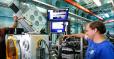
Beamtime guide on the SAX / WAXS beamline at the Australian Synchrotron.
The User Advisory Committee (UAC) is an independent group that provides advice to ANSTO Australian Synchrotron (AS) senior management on issues from a user perspective.

The Australian Synchrotron is a source of powerful X-rays and infrared radiation that can be used for a wide range of scientific and technical purposes. Synchrotron X-rays are millions of times brighter than those produced by conventional X-ray machines in laboratories and hospitals.

The Program Advisory Committees review proposals submitted to a particular beamline at the Australian Synchrotron
The 2023 Australian Synchrotron Stephen Wilkins Thesis Medal has been awarded to Dr Yanxiang Meng from the Walter & Eliza Hall Institute for Medical Research and the University of Melbourne for his research investigating the molecular mechanism at work in a form of programmed cell death, which is implicated in a variety of inflammatory diseases.
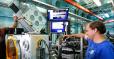
The SAXS / WAXS beamline at the Australian Synchrotron is a highly flexible x-ray scattering facility with purpose-built optics and a very flexible endstation and SAXS camera enable multiple types of experiments.
ANSTO’s Dr Joanne Lackenby and Dr Katie Sizeland have been selected 2018 Superstars of STEM as some of Australia’s most inspiring scientists, technologists and educators.
A collaboration of Australian scientists has used ANSTO’s Australian Synchrotron to measure the amount of carbon that is captured in microscopic seams of deep-sea limestone, which acts as a carbon sink.
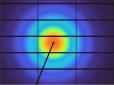
The Biological Small Angle X-ray Scattering beamline will be optimised for measuring small angle scattering of surfactants, nanoparticles, polymers, lipids, proteins and other biological macromolecules in solution. BioSAXS combines combine a state-of-the-art high-flux small angle scattering beamline with specialised in-line protein purification and preparation techniques for high-throughput protein analysis.
A collaborative group including Monash has produced an ultra-thin and ultra-flexible organic solar cell for advanced wearable devices.