
New insights into the fundamental behaviour of water
- Neutron and synchrotron research have confirmed that water's molecular dynamics change dramatically between about -35°C and -20°C when it becomes glassy.
- The findings have relevance for cryopreservation of biological materials, food freezing technologies, and understanding water in living cells, where it is often also confined at the nanoscale.
- Molecules provided by the National Deuteration Facility allowed the researchers to distinguish the behaviour of the water from that of the surrounding lipid material, something that is extremely difficult to achieve with most other techniques.
Find out more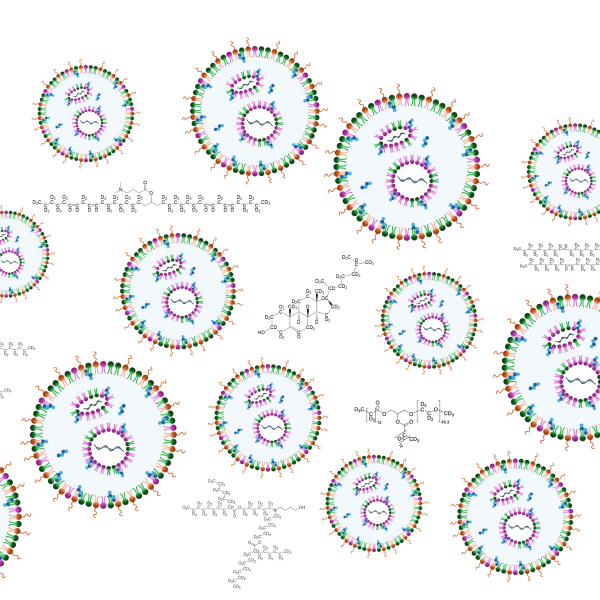
Deuteration supporting the development of next generation mRNA therapeutics
- ANSTO's National Deuteration Facility (NDF) provides access to a large range of deuterium-labelled lipid nanoparticle (LNP) components for LNP characterisation and tracing studies, advancing the development of the next generation of mRNA therapeutics.
- Understanding how LNPs work is essential for the development, and Australia’s sovereign research infrastructure is playing a direct role in making these future therapeutics possible.
- This is a clear example of how investment in national capability leads to real‑world health innovation, strengthens Australian science, and supports breakthroughs that could benefit millions.
Find out more
Synthetic biology: biology re-imagined
The NDF received additional funding in the National Collaborative Research Infrastructure Strategy (NCRIS) 2023 uplift funding round for stable isotope labelling of synthetic biology products. This is helping to build new synthetic biology capability by establishing the expertise, platforms, and infrastructure needed to develop next-generation biomanufacturing solutions.Find out more
2026 NDF Product Catalogue released
The National Deuteration Facility (NDF) has released their 2026 Product Catalogue, now containing over 300 unique deuterated molecules.

Deuteration supports blood test to help diagnose breast cancer
The National Deuteration Facility has supplied deuterium labelled lipids to quantify lipid biomarkers in a blood test to help diagnose breast cancer.Find out more
Landmark achievement opens pathway for treatment of drug-resistant tuberculosis
ANSTO has contributed to a recent publication in Nature Communications Biology that represents a landmark achievement in structural biology: an understanding of protein regulation mechanisms in the bacterium, Mycobacterium tuberculosis (Mtb), the causative agent of tuberculosis (TB) a major global health threat.Find out more
New flow chemistry capability saves deuteration time with high yields
The National Deuteration Facility has developed a capability to use a flow chemistry process to increase efficiency, increase production capacity and reduce decomposition in the synthesis of deuterated molecules.Find out more
Enhancing characterisation capabilities at the NDF
The National Deuteration Facility has recently commissioned a new nuclear magnetic resonance (NMR) spectrometer to enhance characterisation capabilities.Find out more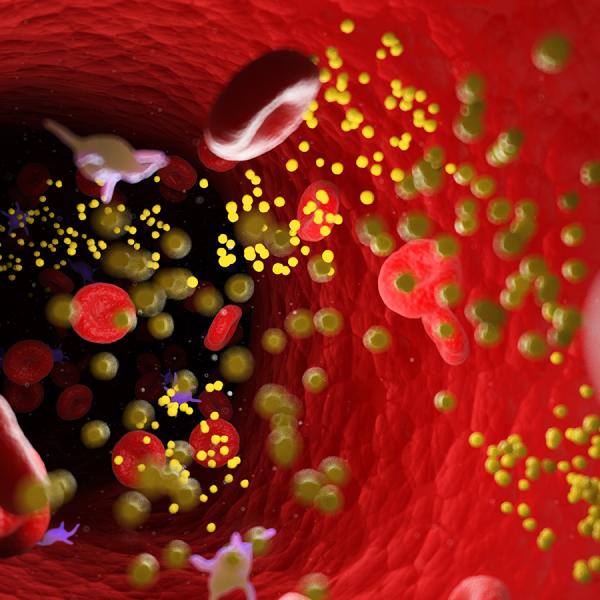
Deuterated Plasmalogens: A New Class of Labelled Lipids from the NDF
The National Deuteration Facility has recently developed a successful synthetic route to access deuterium labelled plasmalogens, which are an important class of lipid for investigating lipid biology and implications for numerous diseases.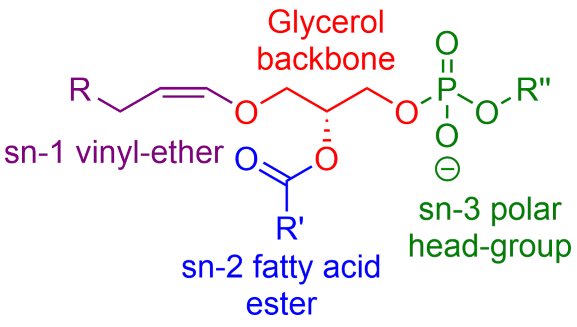


Acknowledgements
The National Deuteration Facility is partly supported by the National Collaborative Research Infrastructure Strategy – an initiative of the Australian Government.