More progress understanding how COVID-19 invades the body
Using the Australian Synchrotron, an international team of researchers has characterised an important interaction that helps the SARS-CoV-2 virus invade human cells.


Showing 1 - 20 of 173 results
Using the Australian Synchrotron, an international team of researchers has characterised an important interaction that helps the SARS-CoV-2 virus invade human cells.
Understanding how COVID supresses the immune system may lead to antiviral strategies
Researchers led by the University of Bristol (UK) have identified a possible cause of SARS-CoV-2’s increased infectivity compared to SARS-CoV
International research led by Monash University and the Peter Doherty Institute for Infection and Immunity has achieved a proof of concept for a new, fast, portable saliva screening test that uses an infrared light technology to confirm infection with SARS-CoV-2.


Seeing inside an ancient Australian Indigenous artefact non-invasively using neutron tomography.

Beamtime Guide on the X-ray Fluorescence Microscopy beamline at the Australian Synchrotron.





ANSTO is a highly regulated organisation. Our governance system and processes provide critical guidance to effectively manage ANSTO’s activities. This section outlines the processes and systems that are in place to provide assurance to Government, our stakeholders and the community that we are working within our regulated and mandated requirements.

Australian Nuclear Science and Technology Organisation (ANSTO) is committed to protecting your personal information in accordance with the Privacy Act 1988 (Cth) (Privacy Act) and the Australian Privacy Principles.


Dr Karin Soldenhoff is a Principal Consultant within ANSTO's minerals area, managing the process development and research groups.
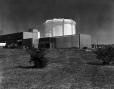
In April 15, 1953, Australia entered the nuclear science arena, when the Atomic Energy Act came into effect. The Australian Atomic Energy Commission (AAEC) followed and in 1987 the AAEC evolved into the Australian Nuclear Science and Technology Organisation (ANSTO) as it’s known today.
ANSTO recognises the traditional indigenous owners of the land at all its sites and works to contribute to the recognition of the indigenous cultural heritage of Australia.