Search hero banner

Search results

Showing 21 - 40 of 657 results

Far Infrared beamline

THz - Far Infrared

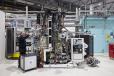
The THz/Far-IR Beamline couples the high brightness and collimation of a bend-magnet synchrotron radiation to a Bruker IFS125HR spectrometer providing high-resolution spectra (0.00096 cm-1) with signal to noise ratio superior to that of thermal sources up to 1350 cm-1 for gas-phase applications; the beamline also delivers signal to noise ratio superior to that of thermal sources up to 350 cm-1 for condensed phase samples.


Shorebirds Competition 2022

Shorebirds Competition 2022

ANSTO is proud to host the Shorebirds Competition for the fifth year. This unique environmental poster competition is free to enter and offers over $4500 in prizes for students and schools!

Beam with cloud

Neutron capture enhanced particle therapy (NCEPT)

A large team of ANSTO scientists in collaboration with University of Wollongong researchers has developed a new hybrid technique that enhances the effectiveness of a cutting-edge form of radiation therapy for advanced cancer.

A look down into the OPAL reactor

Engage with us

To contact ANSTO, let us help find what you need or you can submit an enquiry.

Product photo of Gentech Generator and vials

ANSTO's Gentech® Generator

Supporting healthcare professionals in Australia with easy-to-access resources related to ANSTO’s Gentech® Generator.

Cryogenic Permanent Magnet Undulator (CPMU) source for the BRIGHT Nanoprobe beamline

Nanoprobe beamline (NANO) - under construction

The BRIGHT Nanoprobe beamline provides a unique facility capable of spectroscopic and full-field imaging. NANO will undertake high-resolution elemental mapping and ptychographic coherent diffraction imaging. Elemental mapping and XANES studies (after DCM upgrade) will be possible at sub-100 nm resolution, with structural features able to be studied down to 15 nm using ptychography.

X-ray absorption spectroscopy

X-ray absorption spectroscopy

X-ray absorption spectroscopy (XAS) is a versatile tool for chemistry, biology, and materials science. By probing how x rays are absorbed from core electrons of atoms in a sample, the technique can reveal the local structure around selected atoms.

Micro-Computed Tomography beamline (MCT)

Micro-Computed Tomography beamline (MCT)

With enhanced submicron spatial resolution, speed and contrast, the Micro-Computed Tomography beamline opens a window on the micron-scale 3D structure of a wide range of samples relevant to many areas of science including life sciences, materials engineering, anthropology, palaeontology and geology. MCT will be able to undertake high-speed and high-throughput studies, as well as provide a range of phase-contrast imaging modalities.

High Performance Macromolecular Crystallography Beamline (MX3)

High Performance Macromolecular Crystallography Beamline (MX3)

The High Performance Macromolecular Crystallography beamline will enable the study of very small (sub-5 micrometre) or weakly diffracting crystals, providing a state-of-the-art high-throughput facility for researchers. MX3 will be able to study the structures of large proteins and protein complexes for virology, drug design and industrial applications via goniometer mounted crystals, in-tray screening, or via serial crystallography methods.

Soft x-ray spectroscopy

Soft x-ray spectroscopy

Soft x-rays are generally understood to be x-rays in the energy range 100-3,000 eV. They have insufficient energy to penetrate the beryllium window of a hard x-ray beamline but have energies higher than that of extreme ultraviolet light.

Astronaut floating cells

Radiation biology

In space, without the protection of the magnetosphere, the type and dose of radiation is considerably different to what is naturally experienced on earth.

Infrared microspectroscopy

Infrared microspectroscopy

The Infrared Microspectroscopy beamline combines the high brilliance and collimation of the synchrotron beam through a Bruker V80v Fourier Transform Infrared (FTIR) spectrometer and into a Hyperion 3000 IR microscope to reach high signal-to-noise ratios at diffraction limited spatial resolutions between 3-8 μm.

OPAL Reactor Core

What is radiation?

Radiation can be described as energy or particles from a source that travel through space or other mediums. Light, heat, and wireless communications are all forms of radiation.

Pagination