
Instrument Scientist
Role at ANSTO
Dr Richard Mole is an instrument scientist co-responsible for the cold-neutron time-of-flight spectrometer PELICAN.


Showing 21 - 40 of 56 results
Role at ANSTO
Dr Richard Mole is an instrument scientist co-responsible for the cold-neutron time-of-flight spectrometer PELICAN.


ANSTO's Melbourne location is home to the ANSTO-owned and operated Australian Synchrotron. The Synchrotron is one of the Australia's most significant pieces of scientific infrastructure.

ANSTO’s Lucas Heights campus has an extensive range of specialised facilities and capabilities that are available to assist industry-based professionals in solving problems. Please contact us to discuss how we can assist you. We are open to entering into commercial arrangement with appropriate partners.

Frequently asked questions about ANSTO for the community.

Voucher scheme accelerating medical research
Parents can use their NSW Government Creative Kids Voucher to pay for ANSTO's School Holiday workshops.

Radioisotopes are widely used in medicine, industry, and scientific research. New applications for radioisotopes are constantly being developed.
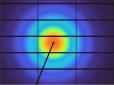
The Biological Small Angle X-ray Scattering beamline will be optimised for measuring small angle scattering of surfactants, nanoparticles, polymers, lipids, proteins and other biological macromolecules in solution. BioSAXS combines combine a state-of-the-art high-flux small angle scattering beamline with specialised in-line protein purification and preparation techniques for high-throughput protein analysis.
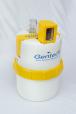
ANSTO’s nuclear medicine processing and distribution facility assembles, loads, tests and distributes a range of nuclear medicine products, including Mo-99. The Mo-99 is dispensed into an ANSTO radiopharmaceutical Gentech® Generator where it decays to Tc-99m.

Learn. Create. Innovate
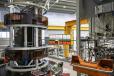
This state-of-the-art metastable-exchange optical-pumping helium-3 polarising system enables polarisation-analysis experiments on five of our existing instruments.
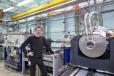
X-ray absorption spectroscopy (XAS) is a versatile tool for chemistry, biology, and materials science. By probing how x rays are absorbed from core electrons of atoms in a sample, the technique can reveal the local structure around selected atoms.

Explore ANSTO's range of publications and reports available for the public.

ANSTO has a full suite of mineralogical, chemical and hydrometallurgical facilities from laboratory through to pilot scale.

The Advanced Diffraction and Scattering beamlines (ADS-1 and ADS-2) are two independently operating, experimentally flexible beamlines that will use high-energy X-ray diffraction and imaging to characterise the structures of new materials and minerals.

The Australian Synchrotron is a source of powerful X-rays and infrared radiation that can be used for a wide range of scientific and technical purposes. Synchrotron X-rays are millions of times brighter than those produced by conventional X-ray machines in laboratories and hospitals.

The Minerals consultancy group at ANSTO has expertise in chemical engineering, metallurgy, mineralogy, chemistry, geology, and radiation safety. We can support our client's project by providing process development services, technical review, and research.