
Connect with ANSTO's Women in STEM
Read about an ANSTO scientist and their work to prepare for a school project or interview.


Showing 21 - 40 of 41 results
Read about an ANSTO scientist and their work to prepare for a school project or interview.

The Advanced Diffraction and Scattering beamlines (ADS-1 and ADS-2) are two independently operating, experimentally flexible beamlines that will use high-energy X-ray diffraction and imaging to characterise the structures of new materials and minerals.
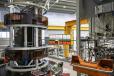
This state-of-the-art metastable-exchange optical-pumping helium-3 polarising system enables polarisation-analysis experiments on five of our existing instruments.
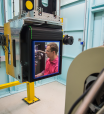
The High Performance Macromolecular Crystallography beamline will enable the study of very small (sub-5 micrometre) or weakly diffracting crystals, providing a state-of-the-art high-throughput facility for researchers. MX3 will be able to study the structures of large proteins and protein complexes for virology, drug design and industrial applications via goniometer mounted crystals, in-tray screening, or via serial crystallography methods.

The BRIGHT Nanoprobe beamline provides a unique facility capable of spectroscopic and full-field imaging. NANO will undertake high-resolution elemental mapping and ptychographic coherent diffraction imaging. Elemental mapping and XANES studies (after DCM upgrade) will be possible at sub-100 nm resolution, with structural features able to be studied down to 15 nm using ptychography.

Particle Induced X-ray Emission (PIXE) is a powerful and relatively simple analytical technique that can be used to identify and quantify trace elements typically ranging from aluminium to to uranium.

The OPAL research reactor's design and integrated safety features mean it is extremely safe; a fact confirmed by independent analysis.
Investigators have verified and quantified the relationship between the Earth’s land biosphere and changes in temperature and provided evidence that temperature impacts the cycling of carbon between land, ocean and the atmosphere.
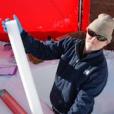

Stewart started at ACNS in 2007 after completing his Bachelor’s degree where he completed his honours projects with ANSTO.


Archive of ANSTO research publications, seminars and short talks.
Using neutron imaging techniques at ANSTO, researchers from Macquarie University have gained a better understanding of how corrosion forms and spreads through concrete that is commonly used in sewer pipes.

Pip is a passionate creative who is obsessed with applying design thinking to any and every project she can get her hands on, no matter the topic.
Atmosphere scientists find link between indigenous weather knowledge and Sydney air pollution.

Publications and resources from the Powder Diffraction beamline.