
This illustrated periodic table explores key information about the chemical elements.
The small poster is also compatible with the ANSTO XR app on iOS and Google play. Alternatively, downloaded posters can be printed landscape on an A3 sheet and hung on a wall to maximise usability.

Showing 21 - 40 of 371 results
Australian Synchrotron celebrates 20,000 research partnerships
Event celebrates 15 years of operation of the OPAL multi-purpose reactor
ANSTO and the Embassy of Argentina in Australia proudly hosted an event commemorating the 15th anniversary of the opening of the Open Pool Australian Lightwater (OPAL) multi-purpose nuclear reactor on 18 October.
A robust mixed metal-organic framework for CO2 absorption and conversion
Australian-first detector to accelerate cancer research
Multi-million dollar Australian Cancer Research Foundation (ACRF) Detector launched at the Australian Synchrotron,
ANSTO’s Dr Karina Meredith appointed to UN scientific panel on the effects of nuclear war
The panel will investigate a wide range of potential effects spanning radiological, environmental, climatic, agricultural, public health, and socio-economic impacts, through a scientifically rigorous and independent lens.
What are radioisotopes?
Radioisotopes are widely used in medicine, industry, and scientific research. New applications for radioisotopes are constantly being developed.

CMMS Client Support Officer
Grahame is an Electrical Engineer (BE(Hons)) and has a Master of Engineering Management (MEM)(MBA for people in a technical environment). He recently completed a Graduate Certificate in Machine Learning and Computer Vision.
Determining the extent of soil erosion on a NSW vineyard
OPAL reactor back online after planned long shutdown
ANSTO’s OPAL multi-purpose research reactor at Lucas Heights has officially returned to power and recommenced operations, following a months-long planned shutdown to carry out essential maintenance and upgrades.

Apps
ANSTO has a variety of games and apps to educate students on how radiation works, nuclear medicine, the periodic table, and atom building.
Bringing radiochemistry to life
$12.5 million for new jobs from ANSTO’s Innovation Precinct
The NSW Government will invest $12.5 million to support the expansion of the Innovation Precinct at the Lucas Heights campus of the Australian Nuclear Science and Technology Organisation (ANSTO).
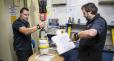
Gentech Generator
Developed by ANSTO’s predecessor the Australian Atomic Energy Commission (known as the AAEC) in the late 1960s, the Technetium-99m Generator revolutionised nuclear medicine imaging in Australia by enabling imaging procedures to be performed not only in major capital cities but throughout regional and rural Australia.
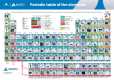
Periodic Table of the Elements

Teacher Professional Development Courses
ANSTO is an experienced provider of Teacher Professional Development for Australian and International teachers and our courses cover a wide range of topics. Hear from expert speakers, receive new education resources, and develop lessons for your own class.
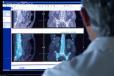
Radionuclides in medicine
Nuclear medicine uses radiation to provide information about the functioning of a person's specific organs to diagnose or treat disease.
For three unknown medical radionuclides, students will graph their decay over time, use the graph to calculate their half-life, and determine the identify and use of each radionuclide using background information provided.
Science is in while school is out this Easter
Understanding landscape evolution in intra-plate areas
Insights into the formation of deep river canyons mountain ranges in intra-tectonic plate areas by SAAFE Scholarship recipient and collaborators.

Investigating radiation in the air we breathe
Radon is a significant component of background radiation and can accumulate in poorly ventilated indoor environments.
In this data set, we investigated the effect of electrostatically charging a balloon, which was then hung in an enclosed space, on its level of radioactivity.
Students write a hypothesis, graph data, write a conclusion and use provided information to answer questions about radioactivity and radon, experimental design, accuracy, validity and reliability.