Search hero banner

Search results

Showing 21 - 40 of 403 results

High Performance Macromolecular Crystallography Beamline (MX3)

High Performance Macromolecular Crystallography Beamline (MX3)

The High Performance Macromolecular Crystallography beamline will enable the study of very small (sub-5 micrometre) or weakly diffracting crystals, providing a state-of-the-art high-throughput facility for researchers. MX3 will be able to study the structures of large proteins and protein complexes for virology, drug design and industrial applications via goniometer mounted crystals, in-tray screening, or via serial crystallography methods.

generic-background-image

Online learning

Discover the amazing world of nuclear science from your classroom. Join us for Meet an Expert, Nuclear Science Inquiry Skills, Junior Science, and Online Depth Study sessions for Chemistry, Physics and Investigating Science.

ANSTO Opal

Accessing ANSTO’s Service Portal

ANSTO offers a broad range of programs and services to various industries and customers. Many of these services, including the Australian Nuclear Medicine Traceability program, are supported by online customer portals.

business-services-irradiation-silicon-ingots-web

Silicon irradiation

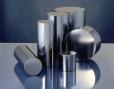
ANSTO is one of the world's leading providers of irradiation services for silicon ingots, which are used by the multimillion dollar electronics industry across Europe and Asia. Each year, ANSTO irradiates more than 50 tonnes of silicon.

Nuclear thermal propulsion

Nuclear propulsion systems

ANSTO researchers are investigating nuclear propulsion systems for applications on the sea and in space.

Health products customer update archive

Archive

See details of previously published customer updates from our Health products team. 

Big Ideas forum 2020

Big Ideas

ANSTO Big Ideas encourages students to creatively communicate the work of an Australian scientist, and explain how their work has inspired them to come up with a Big Idea to make our world a better place. This competition is intended to engage and support Australian students in years 7-10 in Science and encourage them to pursue studies and careers in STEM.

Why OPAL is an advanced reactor

With the screening of the popular HBO series about Chernobyl, we asked our Nuclear Analysis team for their insights on key differences between the reactor in the TV series, a Generation II RBMK power reactor and ANSTO’s state of the art research reactor OPAL.

Melbourne - Access

Melbourne Access Proposals

ANSTO’s user office in Melbourne offers access to the Australian Synchrotron, a world-class research facility with over 4,000 user visits per year. ANSTO seeks collaboration and partnerships with research organisations, scientific users and commercial users.

OPAL reactor back online after planned long shutdown

ANSTO’s OPAL multi-purpose research reactor at Lucas Heights has officially returned to power and recommenced operations, following a months-long planned shutdown to carry out essential maintenance and upgrades.

Australian Centre for Neutron Scattering

Australian Centre for Neutron Scattering

The Australian Centre for Neutron Scattering (ACNS) is a major research facility for neutron science that comprises a suite of neutron instruments with a range of techniques for scientific investigations in physics, chemistry, materials science, medicine and environmental science among other fields.

business-services-health-ansto

Nuclear Medicine

ANSTO manufacture and supply a range of radiopharmaceuticals, radiochemicals, kits and accessories for use in research, industry and the health sector.

TPD teachers development

Teacher Professional Development Courses

ANSTO is an experienced provider of Teacher Professional Development for Australian and International teachers and our courses cover a wide range of topics. Hear from expert speakers, receive new education resources, and develop lessons for your own class.

ANSTO Publications Online (APO)

ANSTO Library

ANSTO Publications Online is a digital repository for publications authored by ANSTO staff and collaborators since 1956.

Pagination