
Advanced reactors
Advanced nuclear reactors, such as molten salt-based reactors and very high-temperature reactors provide a viable option within a future mix of energy systems.


Showing 21 - 40 of 85 results
Advanced nuclear reactors, such as molten salt-based reactors and very high-temperature reactors provide a viable option within a future mix of energy systems.

Bushfires heat soil to extreme temperatures and this causes oxidation of chromium to a highly toxic and carcinogenic form.
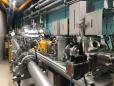
The Medium Energy- X-ray Absorption Spectroscopy beamlines provides access to XANES and EXAFS data from a bending magnet source, optimised for cutting-edge applications in biological, agricultural and environmental science in an energy range that is not currently available at the Australia Synchrotron.
Environmental scientists at ANSTO have been undertaking research to gain a better understanding of the potential impact of contaminants on decommissioned offshore oil and gas infrastructure since 2017
The panel will investigate a wide range of potential effects spanning radiological, environmental, climatic, agricultural, public health, and socio-economic impacts, through a scientifically rigorous and independent lens.
The outcome could have significant implications for better monitoring, management and remedial action of groundwater globally.
ANSTO participation in ARC on Intelligent Robotic Systems for Real-time Asset Management has potential benefit in the management of infrastructure and assets
The technique of using radiocarbon to establish the age of artefacts and other samples as well as to provide insights on climate, has just been updated with the publication of the new radiocarbon curves.
The start of ANSTO’s research to support the Securing Antarctica’s Environmental Future (SAEF) program commenced with the official launch of the program and the departure of two students from Queensland University of Technology (QUT), who are affiliated with ANSTO to Antarctica’s Macquarie Island for six months to collect environmental samples as part of the (SAEF) program.
Advanced imaging technique used to study triggers that lead to tree death

The BRIGHT Nanoprobe beamline provides a unique facility capable of spectroscopic and full-field imaging. NANO will undertake high-resolution elemental mapping and ptychographic coherent diffraction imaging. Elemental mapping and XANES studies (after DCM upgrade) will be possible at sub-100 nm resolution, with structural features able to be studied down to 15 nm using ptychography.

The Panel Pledge aims to increase the visibility and contribution of women and diverse leaders in public and professional forums.
A large collaboration of Australian and New Zealand researchers has established that a thin film technology can be used to monitor stormwater effectively and provides a way to translate the presence of metal contaminants into potential risks to aquatic ecosystems.