

Showing 201 - 220 of 534 results

Senior Nuclear Analyst
Role at ANSTO

Project Joint Lead Investigator/Isotope Paleoclimateologist
Role at ANSTO
Research investigates low activation and low cost superconducting material for magnetic coils in next generation fusion reactors
Sharing forensic expertise benefits real world event in the Philippines
Training hosted and delivered by ANSTO on behalf of the IAEA assisted the Philippine Nuclear Research Institute (PNRI) to prepare for the successful management of a recent nuclear forensics operation.
Australian Synchrotron celebrates 20,000 research partnerships
Promising material provides a simple, effective method capable of extracting uranium from seawater
An Australian-led international research team, including a core group of ANSTO scientists, has found that doping a promising material provides a simple, effective method capable of extracting uranium from seawater.
Untangling spaghetti
Elucidating molecular basis of the complex viscoelastic properties of polymers
Superconductivity ARC Linkage Grant Success
Nanostructure engineered low activation superconductors for fusion energy research.

Graduate Mechanical Engineer
Meg is an engineer with a Bachelor of Engineering (Honours) from the Australian National University, where they specialised in material and mechanical systems and biomedical systems.

Masters of Design - Swinburne University Fintech Firms
Prarthan is a Fun Loving, Innovation Enthusiast, Design Thinker & Leisure Photographer. He has always been engaged towards generating value, connecting to people globally learning new methods, approaches and learning through experimenting.
Improving rail transport
Funding awarded for research on an additive manufacturing technique for use on rail infrastructure.
Australia Chairs 45th National Representatives Meeting of the Regional Cooperative Agreement in Sydney
Queensland reef scientist wins new award for erosion research
Today Dr Jenine McCutcheon from the University of Queensland’s School of Earth and Environmental Sciences has been recognised for her outstanding research with the Australian Synchrotron's Stephen Wilkins Medal.
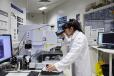
Infrared microspectroscopy
The Infrared Microspectroscopy beamline combines the high brilliance and collimation of the synchrotron beam through a Bruker V80v Fourier Transform Infrared (FTIR) spectrometer and into a Hyperion 3000 IR microscope to reach high signal-to-noise ratios at diffraction limited spatial resolutions between 3-8 μm.
You are what you eat
Cracking the code for crop nutrition and food quality with X-ray fluorescence microscopy.
Research confirms that ancient Tasmania was not a ‘wilderness’ but an Indigenous cultural landscape
Recent studies led by the University of Melbourne have revealed that the Palawa people’s ancient land stewardship techniques have profoundly shaped the landscape of western Lutruwita, within the traditional territories located in Tasmania.

OPAL multi-purpose reactor
Australia’s Open Pool Australian Lightwater (OPAL) reactor is a state-of-the-art 20 megawatt multi-purpose reactor that uses low enriched uranium (LEU) fuel to achieve a range of activities to benefit human health, enable research to support a more sustainable environment and provide innovative solutions for industry.
NSW grants support infrastructure capabilities
NSW grants bolster additive manufacturing and groundwater processing capabilities.
Vice President of the German Parliament visits
Wolfgang Kubicki, MdB and a small delegation visited to see the Spatz neutron instrument donated by Helmholtz Zentrum Berlin (HZB) and discuss research.