Progress on dark matter lab
Moving earth in the search for dark matter: laboratory construction underway at mine site.


Showing 201 - 220 of 1507 results
Moving earth in the search for dark matter: laboratory construction underway at mine site.
New mentor program offers deep brains trust to support the development of southern Sydney startups
Insights into the crystallisation process of twin crystals important for drug production.
Stage 1 of the Stawell Underground Physics Laboratory was officially opened today. It will be home to multi-disciplinary scientists from five research partners who help us understand dark matter.
Letter to Editor of the Sydney Morning Herald following publication of news report
University of Melbourne researchers have investigated a method to produce magnetic nanoparticles in Australia for use in COVID-19 PCR tests.

Bryce has a practical background in control systems spanning 25 years.
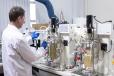
Biodeuteration involves the growth of microorganisms in a heavy water (deuterium oxide) culture medium supplemented with either a deuterated or hydrogenated carbon substrate, depending on the level of deuteration required. The biomass is harvested and the deuterated molecule (e.g. protein) is purified and characterised.
Earlier this month, ANSTO welcomed a delegation of Elders from the Willandra Lakes Region World Heritage site to its Lucas Heights campus. The visit marked a significant collaboration between Traditional Custodians and scientists working to uncover the environmental history of Lake Mungo.
Eighteen Deaf and hard-of-hearing young people aged 12 to 17 from around Australia descend on ANSTO’s Lucas Heights campus for Deaf Youth Science Camp today.
Bushfires in proximity to ANSTO during the 2018 bushfires.
ANSTO to ensure ultra-low radiation environment in newly-funded Stawell Underground Physics Laboratory.
Cracking the code for crop nutrition and food quality with X-ray fluorescence microscopy.


ANSTO offers a broad range of programs and services to various industries and customers. Many of these services, including the Australian Nuclear Medicine Traceability program, are supported by online customer portals.