
Research and development
Our research group carries out fundamental research uniquely applied to industrial problems in the areas of uranium, rare earth and lithium processing.


Showing 221 - 240 of 284 results
Our research group carries out fundamental research uniquely applied to industrial problems in the areas of uranium, rare earth and lithium processing.
Monash University researchers have used advanced techniques at ANSTO to investigate the production of new, elongated polymer nanocapsules with a high payload of drug nanocrystals to potentially increase drug targetability, and also decrease dosage frequency and side effects.
Using neutron imaging techniques at ANSTO, researchers from Macquarie University have gained a better understanding of how corrosion forms and spreads through concrete that is commonly used in sewer pipes.
Imperial College London researchers tapped into ancient geological data locked within precariously balanced rocks using a new technique to boost the precision of hazard estimates for large earthquakes.

Billions of tonnes of iron ore tailings are generated each year from the mining industry. Converting these toxic tailings into soil-like materials which can develop and sustain plant and microbial communities is critical for mine site remediation and improved environmental outcomes.
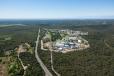
In January 2026, Mr Michael Quigley AM, ANSTO Board Chair, shared ANSTO's Statement of Intent with the Minister for Industry and Innovation, and Minister for Science.
Dr Luiz Bortolan Neto, a structural materials engineer at ANSTO has received an Industry Partnership award for his significant contribution to defence science at the DMTC annual conference in Canberra, last week.
Modelling and experimentation - a powerful combination in probing mechanical properties of ion irradiated materials through nanoindentation.
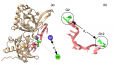
The Scientific Computing team supports researchers by performing numerical simulations that complement experimental research. In particular, we use state-of-the-art software to perform computational quantum mechanical modelling, molecular dynamics simulations, lattice dynamics calculation, data analysis and visualisations.
Mathematical insights explain inconsistencies in experimental data: pyrochlore transformation into defect fluorite or not?
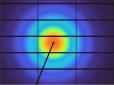
The Biological Small Angle X-ray Scattering beamline will be optimised for measuring small angle scattering of surfactants, nanoparticles, polymers, lipids, proteins and other biological macromolecules in solution. BioSAXS combines combine a state-of-the-art high-flux small angle scattering beamline with specialised in-line protein purification and preparation techniques for high-throughput protein analysis.

Awards and prizes granted at the User Meeting 2020 for scientists.
Study reveals that properties of polycrystalline materials can be derived from microscopic single crystal samples

Highlights of the Energy Materials Project.
The celebration of the UN’s International Women’s Day 2023 has a theme that highlights the power of innovative IT to combat discrimination and the marginalisation of women globally.

ANSTO and the University of Wollongong are jointly operating a unique laboratory able to extract carbon-14 (radiocarbon) atoms out of a rock that is attracting global interest as a new tool to better understand recent changes in Earth’s climate system and rates of landscape change over the past 20, 000 years.