Statement of Intent
In January 2026, Mr Michael Quigley AM, ANSTO Board Chair, shared ANSTO's Statement of Intent with the Minister for Industry and Innovation, and Minister for Science.


Showing 221 - 240 of 330 results
In January 2026, Mr Michael Quigley AM, ANSTO Board Chair, shared ANSTO's Statement of Intent with the Minister for Industry and Innovation, and Minister for Science.
ANSTO will participate in a New Zealand Marsden project which will search for chemical clues linked to the origins of life on Titan, Saturn’s largest moon.
Environmental Scientist Amy Macintosh is researching the impact of the petroleum industry on Australian marine life.
Modelling and experimentation - a powerful combination in probing mechanical properties of ion irradiated materials through nanoindentation.

Accelerator Mass Spectrometry (AMS) is an ultra-sensitive analytical technique based on the use of an ion accelerator as a powerful mass spectrometer.
The National Deuteration facility is assisting with the establishment of a Japanese Chemical Deuteration Facility.

The Planetary Materials theme at ANSTO is co-ordinated by Helen Maynard-Casely and Helen Brand.
Stable, highly conductive 2D nanosheets of boron nitride promising new material.
Researchers from ANSTO and NASA’s Jet Propulsion Laboratory have uncovered the likely mineral composition of Saturn’s largest moon, Titan, revealing a world of exotic organic crystals unlike any found on Earth.
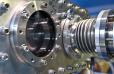
Recoil Time of Flight Spectrometry (RTOF) is used to detect a multitude of elements by separating their masses. unambiguously
New research published in the journal Nature Nanotechnology shows that the next generation of lithium-sulphur (Li||S) batteries may be capable of being charged in less than five minutes, instead of several hours as is currently the case.

Radioisotopes are widely used in medicine, industry, and scientific research. New applications for radioisotopes are constantly being developed.

Most fingermark research has largely focussed on the organic material in residues. Consequently, a gap in fundamental knowledge exists when it comes to inorganic components such as metals.
The newly built Medicines Manufacturing Innovation Centre (MMIC), co-located at the Australian Synchrotron at Clayton, was officially opened on Wednesday by the Victorian Deputy Premier and Minister for Medical Research the Hon Ben Carroll.

This scholarship recognises outstanding ability and promise in the field of nuclear science and technology, specifically as it applies to nuclear energy. Successful applicants will demonstrate a history of interest in nuclear energy and a desire to continue this interest.
Synchrotron infrared technique reveals first insights into evolution and structure of Australian basket-web spider’s silk.
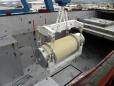
ANSTO waste management services meet regulatory requirements and international best practice standards.