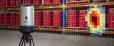
CORIS360® advanced radiation imaging solution
CORIS360 delivers fast, accurate radiation detection and imaging, making invisible radiation visible to improve safety and decision making in radioactive environments.


Showing 241 - 260 of 673 results
CORIS360 delivers fast, accurate radiation detection and imaging, making invisible radiation visible to improve safety and decision making in radioactive environments.

Learn. Create. Innovate
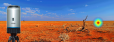
A tiny 8mm by 6mm radioactive capsule went missing in January 2023, somewhere along a 1400 kilometre journey from Rio Tinto’s Gudai-Darri iron ore mine to its final destination in Perth, Western Australia. Find out how ANSTO's CORIS360® technology identified the exact location of the missing source.
The Powder Diffraction beamline at the Australian Synchrotron is optimised for carrying out structural investigation under non ambient conditions and as a function of time.


ANSTO has agreed to participate in an Australian trial of a review of research infrastructure access proposals in which applicants remain anonymous to aid the removal of structural barriers to the career progression of Women in STEM.

The BRIGHT Nanoprobe beamline provides a unique facility capable of spectroscopic and full-field imaging. NANO will undertake high-resolution elemental mapping and ptychographic coherent diffraction imaging. Elemental mapping and XANES studies (after DCM upgrade) will be possible at sub-100 nm resolution, with structural features able to be studied down to 15 nm using ptychography.
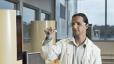
Neutron Activation Analysis (NAA) is a highly sensitive method of quantitative elemental analysis. There is a wide range of potential applications for neutron irradiations.
The ARC Centre of Excellence (CoE) for Green Electrochemical Transformation of Carbon Dioxide, GETCO2, will support innovative approaches to carbon capture.
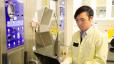
Latest information on the scheduled supply of our nuclear medicine production.
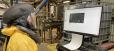
ANSTO has a full suite of mineralogical, chemical and hydrometallurgical facilities from laboratory through to pilot scale.
ANSTO has contributed to work by scientists from the Tokyo Institute of Technology on a promising proton conductor for next-generation ceramic fuel cells.
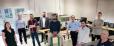
The Detection & Imaging group builds on ANSTO’s 70-year history of scientific achievements and contributions in meeting the nuclear needs of industry, globally.

This scholarship recognises outstanding ability and promise in the field of nuclear science and technology, specifically as it applies to nuclear energy. Successful applicants will demonstrate a history of interest in nuclear energy and a desire to continue this interest.
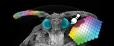
Are you a school student who likes a creative challenge? Enter our new Incredible Insects Competition during the month of July 2021! You could win yourself a prize pack worth over $100! School students from all States/ Territories of Australia are invited to enter.
ANSTO scientist, Dr Klaus Wilcken of the Centre for Accelerator Science, used cosmogenic nuclide dating to determine the ages of layered sand and gravel samples, in which seven footprints of the flightless bird, the moa, were found on the South Island in New Zealand in 2019.
The mining industry is set to benefit from a new Australian capability that uses a nuclear scanning technique to detect the presence of precious metals and strategic minerals in a core sample.