
Shorebirds Competition 2022
ANSTO is proud to host the Shorebirds Competition for the fifth year. This unique environmental poster competition is free to enter and offers over $4500 in prizes for students and schools!


Showing 261 - 280 of 1113 results
ANSTO is proud to host the Shorebirds Competition for the fifth year. This unique environmental poster competition is free to enter and offers over $4500 in prizes for students and schools!
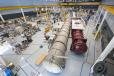
The Australian Centre for Neutron Scattering (ACNS) is a major research facility for neutron science that comprises a suite of neutron instruments with a range of techniques for scientific investigations in physics, chemistry, materials science, medicine and environmental science among other fields.


The Macromolecular Crystallography beamlines at the Australian Synchrotron (MX1 and MX2) are general purpose crystallography instruments for determining chemical and biological structures.

Radiation can be described as energy or particles from a source that travel through space or other mediums. Light, heat, and wireless communications are all forms of radiation.

ANSTO's Sydney locations are home to the Open Pool Australian Light-water (OPAL) multi-purpose reactor, the Centre for Accelerator Science (CAS), the Australian Centre for Neutron Scattering, the National Research Cyclotron and the National Deuteration Facility.

You are invited to submit to the various awards from ANSTO, User Advisory Committee (UAC) and Australian Neutron Beam User Group (ANBUG).

New screening method developed to confirm if deuteration improves metabolic stability.
ANSTO has supported research that revealed for the first time that marine reptile ichthyosaurs consumed pterosaurs before becoming prey themselves to giant marine predators.
Proposals at the Australian Centre for Neutron Scattering and National Deuteration Facility.
In part 1 of this two-part series, ANSTO scientists from across the organisation became film critics to review Christopher Nolan’s new movie, Oppenheimer, which explores the life of the director of the Manhattan Project to develop an atomic weapon.
The Minerals consultancy group at ANSTO has expertise in chemical engineering, metallurgy, mineralogy, chemistry, geology, and radiation safety. We can support our client's project by providing process development services, technical review, and research.
Scientists at ANSTO characterise structures with atomic detail using probes such as x-rays, electrons, neutrons and ions.

Frequently asked questions about beamtime, accommodation and the user portal.

ANSTO is a highly regulated organisation. Our governance system and processes provide critical guidance to effectively manage ANSTO’s activities. This section outlines the processes and systems that are in place to provide assurance to Government, our stakeholders and the community that we are working within our regulated and mandated requirements.

PFAS chemicals in packaging pose serious environmental and health risks, but Australia’s packaging industry is leading the way to phase them out. Backed by cutting-edge nuclear science, industry-led action is creating safer packaging solutions for all Australians.