Search hero banner

Search results

Showing 321 - 340 of 349 results

Micro-Computed Tomography beamline (MCT)

Micro-Computed Tomography beamline (MCT)

With enhanced submicron spatial resolution, speed and contrast, the Micro-Computed Tomography beamline opens a window on the micron-scale 3D structure of a wide range of samples relevant to many areas of science including life sciences, materials engineering, anthropology, palaeontology and geology. MCT will be able to undertake high-speed and high-throughput studies, as well as provide a range of phase-contrast imaging modalities.
Beamtime Guide - X-ray Fluorescence Microscopy

Beamtime Guide - XFM

Beamtime Guide on the X-ray Fluorescence Microscopy beamline at the Australian Synchrotron.

Evidence of spin nematic

Evidence for existence of a highly exotic and elusive state of matter, known as a magnetic ‘spin nematic’ phase in a natural mineral called linarite.

MEX Hutch A

Medium Energy X-ray Absorption Spectroscopy Beamline (MEX-1 and MEX-2)

The Medium Energy- X-ray Absorption Spectroscopy beamlines will provide access to XANES and EXAFS data from a bending magnet source, optimised for cutting-edge applications in biological, agricultural and environmental science in an energy range that is not currently available at the Australia Synchrotron.

Energy Materials

Energy Materials

Creating a global energy system that is both environmentally and economically sustainable is unquestionably one of the largest challenges facing the scientific and engineering communities.

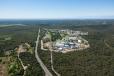
Aerial image of ANSTO's Lucas Heights facility

Statement of Intent

In January 2026, Mr Michael Quigley AM, ANSTO Board Chair, shared ANSTO's Statement of Intent with the Minister for Industry and Innovation, and Minister for Science.

Intrigued by the buzz of electronics and the wizardry of computer programming? Understand what an Arduino is and the basics of how it works!
Sydney
Highlights Cultural Heritage

Highlights - Cultural Heritage

Over the last decades, neutron, photon, and ion beams have been established as an innovative and attractive investigative approach to characterise cultural-heritage materials.

Pagination