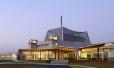
How safe is OPAL?
The OPAL research reactor's design and integrated safety features mean it is extremely safe; a fact confirmed by independent analysis.


Showing 321 - 340 of 995 results
The OPAL research reactor's design and integrated safety features mean it is extremely safe; a fact confirmed by independent analysis.
New research published a team from the Imperial College London, University of Glasgow and ANSTO suggests that rock coasts, which make up over half the world’s coastlines, could retreat more rapidly in the future due to accelerating sea level rise.
Since 1962, the United Uranium Scholarship has helped promising young scientists in the field of nuclear energy extend their knowledge and expertise. In 2022, scholarships were awarded to several ANSTO researchers, including Phil Sutton.
A collaboration of scientists from RMIT, ANSTO and the CSIRO has published pioneering research that brings new insights into intrinsically disordered proteins and protein regions (IDPs)/ (IDRs) and how they behave under various physiological processes.
Dr Helen Maynard-Casely will be taking neutron physics on a road trip
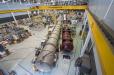
Proposals at the Australian Centre for Neutron Scattering and National Deuteration Facility.
First Asia Oceania Forum held at the Australian Synchrotron
Groundbreaking research published today in the Journal of Vertebrate Paleontology by the Museums Victoria Research Institute and Monash University unveiled a landmark discovery – fossils of the world’s oldest known megaraptorid and the first evidence of carcharodontosaurs in Australia.
In a paper published yesterday, Traditional Owners and researchers report on the oldest securely dated pottery discovered in Australia, located at Jiigurru (Lizard Island Group) on the Great Barrier Reef.

ANSTO is interested finding students to collaborate on Generation IV reactor systems.

On the 10th of October 2025, the Minister for Industry, Science and Technology provided his Statement of Expectations to ANSTO.
Evidence for existence of a highly exotic and elusive state of matter, known as a magnetic ‘spin nematic’ phase in a natural mineral called linarite.

The Centre for Acclerator Science operates accelerators that can be used for space radiation testing.
Million year lag time in transport of sediment in Murray Darling River Basin system.
A 'Challenge-Based Innovation' platform at the nandin Innovation Centre is progressing as part of a funding package from the NSW Government and a Memorandum of Understanding with Swinburne University of Technology and Design Factory Melbourne (DFM).