Launch of deep technology incubator
This week ANSTO formally launched the nandin Deep Technology Incubator, a full-service innovation hub that enables the best and the brightest minds to come together to foster innovation and change.


Showing 341 - 360 of 1371 results
This week ANSTO formally launched the nandin Deep Technology Incubator, a full-service innovation hub that enables the best and the brightest minds to come together to foster innovation and change.
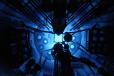
The United Uranium scholarship recognises outstanding ability and promise in the field of nuclear science and technology, specifically as it applies to nuclear energy.

ANSTO provides trusted advice, training and consultancy services to Australia’s resource sector.

Online and interactive while in your home. Kids can zoom into these school holidays workshops and create movies, animations, arcade games, roller coasters and more. Limited spaces: book now.
ANSTO shared plans for an Innovation Precinct in southern Sydney at a breakfast event.

ANSTO researchers are investigating nuclear propulsion systems for applications on the sea and in space.

ANSTO works in partnerships and collaborative ventures with national and international organisations. Partner with ANSTO.
ANSTO recently hosted a public Ask Us Anything event on nuclear medicine, sharing information on how we safely manufacture and distribute nuclear medicine across Australia each week to hundreds of hospitals and clinics.
Parents can use their NSW Government Creative Kids Voucher to pay for ANSTO's School Holiday workshops.
Two early career nuclear scientists who received international scholarships have spent time in the Nuclear Fuel Cycle group at ANSTO are making progress on their work to improve nuclear fuel.
Students from across Australia competed in a fast-paced design challenge about species sustainability during ANSTO's 2024 National Science Week Hackathon. Teachers and students can see the winning entries and access design challenge learning resources from our website.
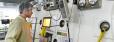
ANSTO has released the Independent Safety Review of Building 23 - Nuclear medicine production facility.
Collaboration investigates a promising new nanoparticle for potential use in combination with other therapies for brain cancer