Showing 341 - 360 of 520 results
Collaboration locates elusive oxygen ions in new solid electrolyte

Project Members - Magnetism
Project members of Magnetism.

How climate change is erasing the world’s oldest rock art
Australasia is home to some of the oldest rock art motifs in the world. In tropical latitudes, due to climate change, the rock art deterioration is accelerating.
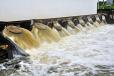
Removal of dangerous contaminants from dirty water
A group from Monash university has sought to make a new innovative nano-porous sieve material which has the potential to be produced on a global scale and is effective for a much longer time.
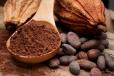
Reducing cadmium in cocoa
New international limits on the cadmium content of cacao products have spurred research to discover how cadmium accumulates in cacao beans, and the effects of processing.
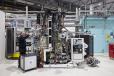
Soft x-ray spectroscopy
Soft x-rays are generally understood to be x-rays in the energy range 100-3,000 eV. They have insufficient energy to penetrate the beryllium window of a hard x-ray beamline but have energies higher than that of extreme ultraviolet light.
Interactions of nanoplastics
Exploring the interaction of polystyrene nanoplastics and blood plasma proteins.
Hackathon success continues
ANSTO-nandin hackathon teams have combined skills using science and business innovation in three successive events.
Research explains how some plants evolved to depend on fire for survival
Researchers based at Monash University and the Swedish Museum of Natural History have pioneered the use of nuclear imaging techniques at ANSTO’s Centre for Neutron Scattering to resolve long-standing problems in plant evolutionary history linked to wildfires.
The physics of producing nanoparticles
Measurement research undertaken to ensure safe, well-engineered nanoparticles
Synchrotron-studied protein sheds light on Parkinson’s, stomach cancer, melanoma
Collaboration across the Tasman has enabled Australian and New Zealand researchers and scientists to shed light on a protein involved in diseases such as Parkinson’s disease, gastric cancer and melanoma.
Graduate Profile - Robert Walwyn
With zero carbon emissions, green hydrogen is a promising fuel for many industries. PhD candidate Robert Walwyn, is researching new, advanced materials for safe and effective hydrogen gas storage.
Advanced imaging techniques provide earliest evidence of fruit-eating by ancient bird
International palaeontologists have used advanced imaging techniques at ANSTO’S Australian Synchrotron to clarify the role that the earliest fruit-eating birds of the Cretaceous period may have had in helping fruit-producing plants to evolve.
New grant introduces state-of-the-art capability in stress engineering for Australian industry
New facility will greatly enhance Australia’s capability in stress engineering for industry

In-situ cosmogenic carbon-14
ANSTO and the University of Wollongong are jointly operating a unique laboratory able to extract carbon-14 (radiocarbon) atoms out of a rock that is attracting global interest as a new tool to better understand recent changes in Earth’s climate system and rates of landscape change over the past 20, 000 years.
Australian Synchrotron MX2 Upgrade

Beamline Scientist, Micro-Computed Tomography Beamline
Role at ANSTO

ANSTO User Meeting - Speakers
ANSTO User Meeting 2021 - Speakers