

Showing 341 - 360 of 605 results
Nuclear techniques help unlock structure
Research on a rare type of superconducting intermetallic alloy
A cleaner future for Darwin Harbour

Masters of Design Student - Swinburne University
Terry has studied in Singapore and Australia, focusing on teaching design. He is passionate about cross-cultural interactive learning and design research to inspire new and innovative concepts.

Anonymised Review
ANSTO has agreed to participate in an Australian trial of a review of research infrastructure access proposals in which applicants remain anonymous to aid the removal of structural barriers to the career progression of Women in STEM.
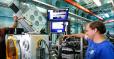
Beamtime guide - SAXS / WAXS
Beamtime guide on the SAX / WAXS beamline at the Australian Synchrotron.
Netflix series 'Radioactive Emergency' reviewed by ARPANSA and ANSTO radiation experts
Blake Orr from ARPANSA review the Netflix series Radioactive Emergency.

Instrument Scientist
Role at ANSTO
Science supports species survival by tackling contaminants and developing ingenious approaches
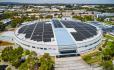
The Australian Synchrotron
A world-class national research facility that uses accelerator technology to produce a powerful source of light-X rays and infrared radiation a million times brighter than the sun.
Excavation of dark matter lab completed
With all excavation completed and rock removed from the underground site, the physics lab will now be built within the caverns of the Stawell Mines site.
Australia and IAEA partnership launches new radiation oncology project to improve cancer patient outcomes in Asia and Pacific region
Australia launched a new international development project in partnership with the International Atomic Energy Agency (IAEA) to advance ‘Rays of Hope’ in the Asia and Pacific region.
Towards realisation of novel semiconductor radiation detectors
Publications
Publications and resources from the Powder Diffraction beamline.
Radiocarbon dating and stable isotope analysis contribute to Antarctic research
Study shows for the first time that vegetation in the Windmill Islands, East Antarctica is changing rapidly in response to a drying climate.
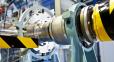
Elastic Recoil Detection Analysis
Elastic Recoil Detection Analysis (ERDA) is used principally as a method for measuring hydrogen in thin layers, and in the near-surface region of materials.
Today we celebrate 65 years since the official opening of Australia’s first nuclear research reactor in 1958
ANSTO is celebrating the official opening of HIFAR, Australia’s first nuclear reactor, sixty-five years ago.

Deuterated ionic liquids
Accomplished Australian researchers recognised by peers with synchrotron science awards
The power of deuteration brings insight for mRNA-based drug delivery and vaccines
The National Deuteration Facility is providing deuterated cholesterol, an essential ingredient in lipid nanoparticles for the delivery of vaccines using mRNA, to academic and industry partners.