In a new study published in Nature Communications, researchers from UNSW have demonstrated a more sustainable alternative: an electrochemical pathway that couples carbon dioxide and nitrogen-containing species to produce urea under mild conditions.
ANSTO to receive a new grant to continue to fight chronic kidney disease killer in Sri Lanka.

Senior Scientist - X-ray Fluorescence Microscopy
Role at ANSTO

Lead Scientist MEX Beamline
Role at ANSTO

Senior Scientist - MX
Dr Santosh Panjikar is a beamline scientist at the MX beamlines of the ANSTO, Australian Synchrotron. A large part of his scientific role involves assisting scientists from the crystallography user commun
ANSTO has supported a new study published in Quaternary Science Reviews that dates the dramatic collapse of one of the largest glaciers ever documented in the Himalayas. The findings overturn a long-held assumption about what sustains wet-climate glaciers.
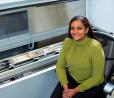
Science Research Leader and Instrument Scientist
Role at ANSTO
In early February, ANSTO was honoured to host the International Atomic Energy Agency (IAEA) National Liaison Officers Meeting and Sub Regional Approach to the Pacific Islands (SAPI) Programme, which focused on the development and delivery of the IAEA Technical Cooperation Programme in the Pacific.
Melbourne researchers map the structure of a key COVID-19 protein using the Australian Synchrotron

Group Executive Nuclear Science and Technology
Andrew Peele was appointed Group Executive for ANSTO Nuclear Science and Technology in July 2021 and was Director of the Australian Synchrotron from 2013 -2021. He is an adjunct Professor of Physics at La Trobe University.

Beamline Scientist
Role at ANSTO
A large team of international researchers have used synchrotron techniques to understand how key proteins contribute to the virulence of the rabies virus, sometimes called the “zombie virus.”
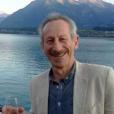
Principal Research Scientist
Role at ANSTO
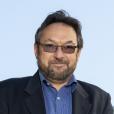
Lead, Food Materials Science; Instrument Scientist, QUOKKA (Small-Angle Neutron Scattering); Honorary Professor, CNFS, The University of Queensland
Role at ANSTO

Capability Area Manager
Role at ANSTO
The process by which plastic degrades in the ocean facilitates its entry into the natural carbon cycle efficiently as carbon dioxide.
International study has revealed a clustering of charged particles in the microgravity environment of space,with implications for the development of materials and better drugs that depend on the mixing of two or more charged particles.
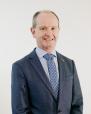
Group Executive - Nuclear Operations, Safety and Security
A team of scientists from The Australian National University (ANU) has discovered how a powerful “weapon” used by many fungal pathogens enables them to cause disease in major food crops such as rice and corn
Pagination

