Hydrogeochemist


Showing 41 - 60 of 534 results
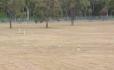
ANSTO is responsible for the Little Forest Legacy Site (LFLS) located within the ANSTO Buffer Zone boundary. This site, formerly known as the Little Forest Burial Ground (LFBG), was used by the Australian Atomic Energy Commission (AAEC) during the 1960’s to dispose of waste containing low levels of radioactivity and beryllium oxide (non-radioactive) in a series of shallow trenches. There has been regular monitoring of the site since 1966 and the results have been reported in ANSTO’s environmental monitoring reports.

ANSTO has been tracking and publishing data on fine particle pollution from key sites around Australia, and internationally, for more than 20 years.
Tool developed for producing F-18 radiopharmaceuticals for PET imaging.
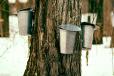
The sap extracted from Sugar Maple trees, is used to produce maple syrup. There are many conflicting theories and an absence of experimental evidence, regarding the mechanisms involved in maple sap exudation.
Research is being undertaken through an Australian Research Council Discovery Project "Reconstructing Australia’s fire history from cave stalagmites", led by Professor Andy Baker at UNSW Sydney and Dr. Pauline Treble at ANSTO. The project aims to calibrate the fire-speleothem relationship and develop coupled fire and climate records for the last millennium in southwest Australia.

A world-class national research facility that uses accelerator technology to produce a powerful source of light-X rays and infrared radiation a million times brighter than the sun.

China’s vertical sandstone pillars studied using nuclear techniques

ANSTO plays a leading role in measuring and characterising fine particles from a range of locations around Australia and internationally.

You are invited to submit to the various awards from ANSTO, User Advisory Committee (UAC) and Australian Neutron Beam User Group (ANBUG).
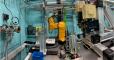
With enhanced submicron spatial resolution, speed and contrast, the Micro-Computed Tomography beamline opens a window on the micron-scale 3D structure of a wide range of samples relevant to many areas of science including life sciences, materials engineering, anthropology, palaeontology and geology. MCT will be able to undertake high-speed and high-throughput studies, as well as provide a range of phase-contrast imaging modalities.
Rare earth elements will be a key area of focus for the Australian Nuclear Science and Technology Organisation’s Minerals unit as it welcomes a $13.9 million funding allocation under the Australian Critical Minerals Research and Development Hub
First publication from PELICAN and National Deuteration Facility
Australia assists in the collection of marine sediments to support contaminant quality control measures by IAEA.