Does size matter?
Improving aquaculture for food production in Papua New Guinea


Showing 41 - 60 of 498 results
Improving aquaculture for food production in Papua New Guinea
A team of ANSTO health researchers, staff at the Centre for Accelerator Science and Dr Melanie Ferlazzo, a postdoc from the French National Institute of Health and Medical Research (INSERM), and scientists from the French Space Agency (CNES), are collaborating on investigations to determine the impact of secondary particles on human cells using the new microprobe beamline at ANSTO’s Centre for Accelerator Science.
Neutron scattering instruments used by Japanese researchers.
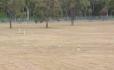
ANSTO is responsible for the Little Forest Legacy Site (LFLS) located within the ANSTO Buffer Zone boundary. This site, formerly known as the Little Forest Burial Ground (LFBG), was used by the Australian Atomic Energy Commission (AAEC) during the 1960’s to dispose of waste containing low levels of radioactivity and beryllium oxide (non-radioactive) in a series of shallow trenches. There has been regular monitoring of the site since 1966 and the results have been reported in ANSTO’s environmental monitoring reports.
Using nuclear techniques to establish the great antiquity of Aboriginal culture: World Heritage Listing for Budj Bim Cultural Landscape.

Research undertaken by Flinders University, the University of Cincinnati (US), Guangzhou University (China) and ANSTO has evaluated a new process to encapsulate fish oil in nanoparticles
Ancient groundwater in Australia contributing carbon to food webs through surface water.

The concrete plinth for the new SPATZ neutron reflectometer has been delivered.
Fish farming is increasing globally to provide an affordable source of protein and income security for local communities. Joshua's research project aims to optimise production of tilapia to enhance food and nutritional security in PNG.
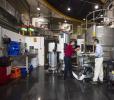
ANSTO offers a diverse range of career opportunities within science, engineering, corporate services and trade disciplines.

ANSTO is committed to monitoring its environmental performance and providing the community with accurate information about it. We also publish live meteorological data from our 49m Lucas Heights weather tower every 15 minutes.
Insights about Mayan Empire relevant for current climate challenges

Offered to girls in Years 5, 6 and 7, the STEAM Club encourages creative exploration of Science, Technology, Engineering and Mathematics through the Arts (the A in STEAM).

Unique landmark instrumentation and expertise are a hallmark of ANSTO’s sovereign capability, unavailable anywhere else in Australia. Our ability to identify the source of hazardous particulates in air, the age of water in aquifers and the detailed chemistry of toxic elements in complex soil and biota specimens are just some examples of ANSTO capability.