

Showing 41 - 60 of 87 results
Strategic research partnership agreement with University of Queensland
Million-year-old ice core recaptures climate history
Retrieving an Antarctic ice core more than a million years old presents challenges and opportunities.
Specialist expertise and capabilities at ANSTO enable an understanding and improvement of current and advanced nuclear fuel materials
With a well-established portfolio of nuclear research and the operation of Australia's only nuclear reactor OPAL, ANSTO scientists conduct both fundamental and applied research on fuel for current, advanced, and future nuclear technology systems.
'Atom hunters' broadcast on ABC
Using the past to illuminate the future: Brothers collaborate on important science documentary for ABC TV
TSPO: Ancient gene ignites potential for drug development
What one moon flyby can and cannot do, and what comes next (Part 2)
Dr Mitra Safavi Naeini continues her commentary of the radiation studies being undertaken in the Artemis II mission.
Sharing expertise with regional neighbours
Participants undertook IAEA training hosted by Macquarie University and ANSTO on use of radionuclides for soil and water investigations.
Investigating the impact of radiation and radioactive contamination on forensic trace evidence
Additional funding for Chronic kidney disease research
ANSTO to receive a new grant to continue to fight chronic kidney disease killer in Sri Lanka.
Australia’s best and brightest nuclear scientists recognised in 2018 ANSTO Awards
The ANSTO Awards in Nuclear Science and Technology 2018 were presented on Friday 2 November at The Australian Museum, and showcased ANSTO’s unique nuclear science and technology capabilities, which enable progress in the key areas of health research and innovation for industry.
ANSTO helping to ensure the safety of astronauts in space
A team of ANSTO health researchers, staff at the Centre for Accelerator Science and Dr Melanie Ferlazzo, a postdoc from the French National Institute of Health and Medical Research (INSERM), and scientists from the French Space Agency (CNES), are collaborating on investigations to determine the impact of secondary particles on human cells using the new microprobe beamline at ANSTO’s Centre for Accelerator Science.
Radiation biology
In space, without the protection of the magnetosphere, the type and dose of radiation is considerably different to what is naturally experienced on earth.
Reconstructing the history of the Australian landscape
Million year lag time in transport of sediment in Murray Darling River Basin system.
Environmental research at archaeological site
Insights about Mayan Empire relevant for current climate challenges
New information on the human health impacts of radiation
Understanding fine particle pollution
Thirty years of ANSTO's unique capability in monitoring fine particle pollution provides insight on bushfire smoke.
Isotope Ecologist
Role at ANSTO
nandin deep tech hothouse sees businesses bloom
Two startups supported by the nandin Innovation Centre at ANSTO have hit the ground running in 2021 securing major opportunities from state governments to see their businesses thrive.
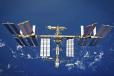
Understanding the full impact of radiation on astronauts
In space, without the protection of the magnetosphere, the type and dose of radiation is considerably different to what is naturally experienced on earth. However, it is the secondary particles of lower energies created when galactic and cosmic radiation interacts with shielding that is of concern for astronauts.