Understanding fine particle pollution
Thirty years of ANSTO's unique capability in monitoring fine particle pollution provides insight on bushfire smoke.


Showing 41 - 60 of 118 results
Thirty years of ANSTO's unique capability in monitoring fine particle pollution provides insight on bushfire smoke.

Accurate low level tritiated water (HTO) data is an essential tool for groundwater dating and understanding groundwater recharge processes.

Detailed data on ANSTO electricity use and CO2 emissions for FY2024 - FY2025
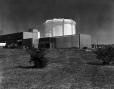
In April 15, 1953, Australia entered the nuclear science arena, when the Atomic Energy Act came into effect. The Australian Atomic Energy Commission (AAEC) followed and in 1987 the AAEC evolved into the Australian Nuclear Science and Technology Organisation (ANSTO) as it’s known today.

ANSTO plays a leading role in measuring and characterising fine particles from a range of locations around Australia and internationally.
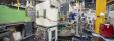
Kowari, a residual stress diffractometer, can be used for ‘strain scanning’ of large engineering components as large as 1000 kilograms.



A world-class national research facility that uses accelerator technology to produce a powerful source of light-X rays and infrared radiation a million times brighter than the sun.
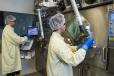
See details of previously published customer updates from our Health products team.


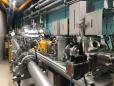
The Medium Energy- X-ray Absorption Spectroscopy beamlines provides access to XANES and EXAFS data from a bending magnet source, optimised for cutting-edge applications in biological, agricultural and environmental science in an energy range that is not currently available at the Australia Synchrotron.

nandin member, SVSR, report on their proof-of-concept for a reusable Graphene Oxide (GO) membrane to capture waste water vapours from ageing sewerage systems.

Dr Karin Soldenhoff is a Principal Consultant within ANSTO's minerals area, managing the process development and research groups.

ANSTO User Meeting 2021 - Speakers