Improving carbon dating
Study helps make carbon dating a more accurate chronological tool.


Showing 41 - 60 of 123 results
Study helps make carbon dating a more accurate chronological tool.

A world-class national research facility that uses accelerator technology to produce a powerful source of light-X rays and infrared radiation a million times brighter than the sun.

Role at ANSTO


Specifications, Instrument reference, User manual.


ANSTO provides a summary of water usage and discharge for FY2024 - FY2025
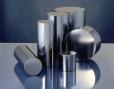
ANSTO is one of the world's leading providers of irradiation services for silicon ingots, which are used by the multimillion dollar electronics industry across Europe and Asia. Each year, ANSTO irradiates more than 50 tonnes of silicon.
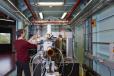
Beamtime Guide on the X-ray Fluorescence Microscopy beamline at the Australian Synchrotron.

ANSTO has safely managed its radioactive waste for over 60 years. Waste is managed in accordance with national and international standards.

The Advanced Diffraction and Scattering beamlines (ADS-1 and ADS-2) are two independently operating, experimentally flexible beamlines that will use high-energy X-ray diffraction and imaging to characterise the structures of new materials and minerals.
Researchers and industry partners from UNSW Australia, the Australian Centre for Nanomedicine, Children’s Cancer Institute and Inventia Life Sciences Pty Ltd have been awarded the 2021 ANSTO Eureka Prize for Innovative Use of Technology for their method to rapidly-produce 3D cell structures

The BRIGHT Nanoprobe beamline provides a unique facility capable of spectroscopic and full-field imaging. NANO will undertake high-resolution elemental mapping and ptychographic coherent diffraction imaging. Elemental mapping and XANES studies (after DCM upgrade) will be possible at sub-100 nm resolution, with structural features able to be studied down to 15 nm using ptychography.