Researchers and industry partners from UNSW Australia, the Australian Centre for Nanomedicine, Children’s Cancer Institute and Inventia Life Sciences Pty Ltd have been awarded the 2021 ANSTO Eureka Prize for Innovative Use of Technology for their method to rapidly-produce 3D cell structures
Today The Australian ran a story entitled “Fears for indigenous lands as foreign nuclear waste headed our way”, 18 September 2018. ANSTO was not contacted in relation to the article, but can provide the following information in response which can be attributed to a spokesperson.
Study helps make carbon dating a more accurate chronological tool.
This state-of-the-art metastable-exchange optical-pumping helium-3 polarising system enables polarisation-analysis experiments on five of our existing instruments.
A groundbreaking international study has provided new insights into global fossil methane emissions, using innovative multi-isotopic atmospheric measurements.

Lead, Food Materials Science; Instrument Scientist, QUOKKA (Small-Angle Neutron Scattering); Honorary Professor, CNFS, The University of Queensland
Role at ANSTO
Specifications, Instrument reference, User manual.

Radiotracer Methods and Organic Chemistry Task Leader
Role at ANSTO
In April 15, 1953, Australia entered the nuclear science arena, when the Atomic Energy Act came into effect. The Australian Atomic Energy Commission (AAEC) followed and in 1987 the AAEC evolved into the Australian Nuclear Science and Technology Organisation (ANSTO) as it’s known today.
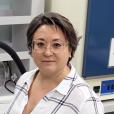
Material scientist
Role at ANSTO
Dr Inna Karatchevtseva undertakes work at ANSTO in two main areas: defence industry research and fundamental materials research.

Radiochemist, Manager of Radiopharmaceuticals
Role at ANSTO
ANSTO has safely managed its radioactive waste for over 60 years. Waste is managed in accordance with national and international standards.

Instrument Scientist (Neutron Reflectometry)
Role at ANSTO

Scientific Operations Group Leader
Role at ANSTO
The BRIGHT Nanoprobe beamline provides a unique facility capable of spectroscopic and full-field imaging. NANO will undertake high-resolution elemental mapping and ptychographic coherent diffraction imaging. Elemental mapping and XANES studies (after DCM upgrade) will be possible at sub-100 nm resolution, with structural features able to be studied down to 15 nm using ptychography.
Pagination