

Showing 41 - 60 of 66 results
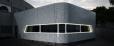
Advanced Diffraction & Scattering Beamlines (ADS-1 and ADS-2) UNDER CONSTRUCTION
The Advanced Diffraction and Scattering beamlines (ADS-1 and ADS-2) are two independently operating, experimentally flexible beamlines that will use high-energy X-ray diffraction and imaging to characterise the structures of new materials and minerals.

User Meeting 2020 Invited Speakers
The User Advisory Committee (UAC) are pleased to present this year's invited speakers.
Powerhouse Museum used powerful non-invasive nuclear and accelerator techniques to gain information about significant Aboriginal cultural belongings
A number of sophisticated non-invasive nuclear and accelerator techniques were used to provide information about the origin and age of an Australian Aboriginal knife held in the collection of the Powerhouse Museum.
Verifying the integrity of products made by additive manufacturing during the build

Travel Funding
The Australian Synchrotron provides funding support for successful beamtime applicants in the form of travel funding and/or onsite accommodation. Travel funds granted are to be used solely to cover the majority of the cost to travel to the AS facility. The User Office will book accommodation for interstate user groups at the onsite AS Guesthouse.
Kimberley rock art dating project
Research will change understanding of Australian Aboriginal rock art found in rock shelters of the Kimberley and its relationship to a changing landscape
Fine-tuning chemistry for advanced materials
Doping with transition metals produced stability in bismuth oxide.
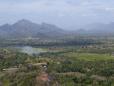
Chronic kidney disease of unknown origin
In 2017, ANSTO's CEO signed a Memorandum of Understanding with Sri Lanka to work together to investigate the epidemiology of Chronic Kidney Disease of unknown origin (CKDu).
Earth-based research link to International Space Station
Neutron scattering instruments used by Japanese researchers.
To D or not to D
New screening method developed to confirm if deuteration improves metabolic stability.
Radiocarbon dating supports Aboriginal occupation of South Australia for 29,000 years
Radiocarbon dating at ANSTO has supported research that vastly extends the known timeline of the Aboriginal occupation of South Australia’s Riverland region.
Insights may lead to design and development of superior metallic alloys
Inaugural particle therapy study tour to Japan
Australian researchers and clinicians have recently returned from Japan where they investigated the use of advanced radiation therapy for cancer using heavy ions at particle therapy facilities on a study tour .
Murray River earth mounds reveal Aboriginal cooking practices spanning 4000 years
Radiocarbon dating at ANSTO has supported new archaeological research conducted by Flinders University and the University of Queensland that describes significant earth mound features used for cooking that were created by Aboriginal people in the Riverland region of South Australia.
Sydney and Perth schools tackle playground waste and clean up with first prize in ANSTO's hackathon
Feathery moa’s fossilised footprints, ancient age revealed
ANSTO scientist, Dr Klaus Wilcken of the Centre for Accelerator Science, used cosmogenic nuclide dating to determine the ages of layered sand and gravel samples, in which seven footprints of the flightless bird, the moa, were found on the South Island in New Zealand in 2019.
First light achieved for new micro-computed tomography beamline under Project BRIGHT
Project Bright, the construction of eight new beamlines at ANSTO’s Australian Synchrotron has reached a milestone by achieving ‘First Light’ for the new micro-computed tomography (MCT) beamline in late NovembeR.

After your experiment
Following your experiment at the Australian Synchrotron there are certain tasks that users can complete including a user feedback survey and claiming reimbursement for travel expenses.
Distinguished lecture: Kimberley rock art
Multi-faceted approach to dating Australian Indigenous rock art from Kimberley region