Corporate Publications
Explore ANSTO's range of publications and reports available for the public.
Showing 41 - 60 of 183 results
Explore ANSTO's range of publications and reports available for the public.
Dr Meng Jun Qin is a materials scientist with expertise in computer modelling
The nuclear medicine community has welcomed the Australian Government’s decision to provide $30 million in funding to ANSTO for the design of a new nuclear medicine manufacturing facility.
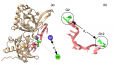
Research demonstrates the existence of hexagonal planar geometry in a transition metal complex with great potential application across multiple disciplines.
It's ANSTO's role to keep Australia across the very latest developments in nuclear science and technology from around the world. Part of this responsibility is keeping us abreast of the latest developments in nuclear power technologies.
Two ANSTO physicist explain the three-body problem as featured in science fiction series of the same name
ANSTO’s user office in Melbourne offers access to the Australian Synchrotron, a world-class research facility with over 4,000 user visits per year. ANSTO seeks collaboration and partnerships with research organisations, scientific users and commercial users.
The Scientific Computing team supports researchers by performing numerical simulations that complement experimental research. In particular, we use state-of-the-art software to perform computational quantum mechanical modelling, molecular dynamics simulations, lattice dynamics calculation, data analysis and visualisations.
The Platypus instrument can be used to study all-manner of surface-science and interface problems, particularly related to magnetic recording materials and for polymer coatings, biosensors and artificial biological membranes.
ITRAX has now analysed more than a kilometre of cores since it became operational in 2012.
A “super” receptor that helps kill HIV infected cells identified.
Radioisotopes are widely used in medicine, industry, and scientific research. New applications for radioisotopes are constantly being developed.
Australasia is home to some of the oldest rock art motifs in the world. In tropical latitudes, due to climate change, the rock art deterioration is accelerating.