

Showing 41 - 60 of 537 results
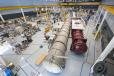
Australian Centre for Neutron Scattering
The Australian Centre for Neutron Scattering (ACNS) is a major research facility for neutron science that comprises a suite of neutron instruments with a range of techniques for scientific investigations in physics, chemistry, materials science, medicine and environmental science among other fields.
What one moon flyby can and cannot do, and what comes next (Part 2)
Dr Mitra Safavi Naeini continues her commentary of the radiation studies being undertaken in the Artemis II mission.
What is radiation?
Radiation can be described as energy or particles from a source that travel through space or other mediums. Light, heat, and wireless communications are all forms of radiation.
Combining irradiation and lithography to engineer advanced conducting materials
Diabetes Awareness Week: The importance of insulin

Visit our Sydney facilities
ANSTO's Sydney locations are home to the Open Pool Australian Light-water (OPAL) multi-purpose reactor, the Centre for Accelerator Science (CAS), the Australian Centre for Neutron Scattering, the National Research Cyclotron and the National Deuteration Facility.

About us
The Detection & Imaging group builds on ANSTO’s 70-year history of scientific achievements and contributions in meeting the nuclear needs of industry, globally.
Ion channels and chronic pain
Explaining glaciers of solid methane and nitrogen on Pluto
Research reports for the first time how solid methane and nitrogen expand in response to temperature changes and resolves an historic ambiguity relating to the structure of nitrogen.
Window into the cell
Access to a ‘window into the cell’ with University of Wollongong cryogenic electron microscope at ANSTO.
Global research team discovers magnetic order in quasicrystals
ANSTO has contributed to international research on quasicrystals that opens the door to tailored magnetic materials.
Common drug source of insights into formation of 'butterfly' crystals
Insights into the crystallisation process of twin crystals important for drug production.

STEM Career Tours
Discover the many career opportunities in the nuclear industry on a special behind the scenes tour of ANSTO.
Fossils go nuclear
Australia’s OPAL multi-purpose reactor prepares for new milestone
Routine transport of spent nuclear fuel

Enhancing the oxidative stability of squalene
Beamline Proposal & Experiment Guide
Guide to successful proposals and experiments at the Powder Diffraction beamline.
Certificate of appreciation from WA DFES
ANSTO and the Australian Radiation Protection and Nuclear Safety Agency (ARPANSA) have been recognised for their valuable contributions to the search and recovery efforts for a missing 8mm-long radioactive capsule in the Western Australian outback.
Powerful synchrotron light confirms the presence of rare diamond in stony meteorites
Australian and international researchers have used ANSTO’s Australian Synchrotron to confirm the presence of an unusual diamond found in stony meteorites.