Featured radiation courses
ANSTO is a recognised leader in radiation safety training, offering courses recognised by industry and relevant regulators.


Showing 401 - 420 of 820 results
ANSTO is a recognised leader in radiation safety training, offering courses recognised by industry and relevant regulators.

ANSTO has been tracking and publishing data on fine particle pollution from key sites around Australia, and internationally, for more than 20 years.
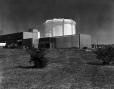
In April 15, 1953, Australia entered the nuclear science arena, when the Atomic Energy Act came into effect. The Australian Atomic Energy Commission (AAEC) followed and in 1987 the AAEC evolved into the Australian Nuclear Science and Technology Organisation (ANSTO) as it’s known today.
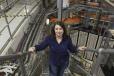
Helen's research interests focus on determining the thermoelastic properties and crystal chemistry of a range of minerals which are of interest in a variety of environmental, planetary geology and industrial settings.

The Australian Synchrotron is a source of powerful X-rays and infrared radiation that can be used for a wide range of scientific and technical purposes. Synchrotron X-rays are millions of times brighter than those produced by conventional X-ray machines in laboratories and hospitals.
An accomplished international photographer has capture dazzling new images of one component of the main ring at our Australian Synchrotron and provided an inside view of the electron’s path when it is used.
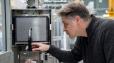
A Laue-diffraction neutron alignment camera for single crystals.
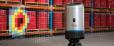
Overlaying a 360° x 90° radiation image onto a panoramic optical image of the scene, makes interpretation much easier. The spectroscopic detector at the heart of the imager enables the accurate visualisation and identification of sources across a broad energy range.

Two ANSTO scientists were part of a research team led by the University of Wollongong, who are finalists for the 2019 NSW Environment, Energy and Science (DPIE) Eureka Prize for Environmental Research.
Dharawal educator Fran Bodkin has spent a good part of her eighty plus years, studying or sharing information about the therapeutic and nutritional properties of traditional indigenous plants and wildlife.
In Part 2 of our series exploring the world of nuclear science and technology at ANSTO, we share more detailed information about the nuclear scientist’s toolkit.
The mining industry is set to benefit from a new Australian capability that uses a nuclear scanning technique to detect the presence of precious metals and strategic minerals in a core sample.

Specifications, Instrument layout, and Instrument reference
Over 250 students took part in ANSTO's annual Science and Engineering Challenge with an all-girl school taking top honours.

Our services include the use of techniques to develop innovative radiation detector technology, such as performing alpha spectroscopy to characterise charge collection capability and radiation transport simulation. We also have expertise in measuring the electrical characteristics of novel detectors and semiconductor devices.