Search hero banner

Search results

Showing 421 - 440 of 1694 results

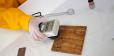
Little forest legacy site

Little forest legacy site

ANSTO is responsible for the Little Forest Legacy Site (LFLS) located within the ANSTO Buffer Zone boundary. This site, formerly known as the Little Forest Burial Ground (LFBG), was used by the Australian Atomic Energy Commission (AAEC) during the 1960’s to dispose of waste containing low levels of radioactivity and beryllium oxide (non-radioactive) in a series of shallow trenches. There has been regular monitoring of the site since 1966 and the results have been reported in ANSTO’s environmental monitoring reports.
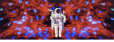
Astronaut floating cells

Radiation biology

In space, without the protection of the magnetosphere, the type and dose of radiation is considerably different to what is naturally experienced on earth.

Graphene superconductor

Superconducting calcium-injected graphene

Since the discovery of superconducting Caintercalated graphite (CaC6) the intercalation of epitaxial graphene on SiC(0001) with Ca has been studied extensively in order to achieve superconductivity.

Glass

The impact of boron on glass surface properties

Within the bulk structure of such glasses, boron is known to be a key actor, as it exhibits intriguing and composition-dependent changes in coordination state that often drive properties.

opal-multipurpose-reactor-safety

How safe is OPAL?

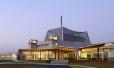
The OPAL research reactor's design and integrated safety features mean it is extremely safe; a fact confirmed by independent analysis.

Aimed at the delegated Radiation Safety Officer responsible for radioactive substances and/or radiation apparatus. This course is well suited to those working in research or medical industries
Sydney
Understanding the full impact of radiation on astronauts

Understanding the full impact of radiation on astronauts

In space, without the protection of the magnetosphere, the type and dose of radiation is considerably different to what is naturally experienced on earth. However, it is the secondary particles of lower energies created when galactic and cosmic radiation interacts with shielding that is of concern for astronauts.

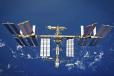
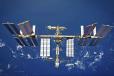
International Space Station

Understanding the full impact of radiation on astronauts

In collaboration with the French National Institute of Health and Medical Research (INSERM) and the French International Space Agency (CNES), ANSTO scientists are undertaking research on the radiobiological effects of secondary particles that are created when radiation interacts with the shielding on the International Space Station.

Pagination