

Showing 441 - 460 of 480 results
The power of deuteration brings insight for mRNA-based drug delivery and vaccines
The National Deuteration Facility is providing deuterated cholesterol, an essential ingredient in lipid nanoparticles for the delivery of vaccines using mRNA, to academic and industry partners.
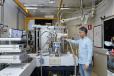
THz - Far Infrared
The THz/Far-IR Beamline couples the high brightness and collimation of a bend-magnet synchrotron radiation to a Bruker IFS125HR spectrometer providing high-resolution spectra (0.00096 cm-1) with signal to noise ratio superior to that of thermal sources up to 1350 cm-1 for gas-phase applications; the beamline also delivers signal to noise ratio superior to that of thermal sources up to 350 cm-1 for condensed phase samples.
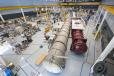
Australian Centre for Neutron Scattering
The Australian Centre for Neutron Scattering (ACNS) is a major research facility for neutron science that comprises a suite of neutron instruments with a range of techniques for scientific investigations in physics, chemistry, materials science, medicine and environmental science among other fields.

Aerosol Sampling Program
ANSTO plays a leading role in measuring and characterising fine particles from a range of locations around Australia and internationally.
Queensland reef scientist wins new award for erosion research
Today Dr Jenine McCutcheon from the University of Queensland’s School of Earth and Environmental Sciences has been recognised for her outstanding research with the Australian Synchrotron's Stephen Wilkins Medal.
Artefact reveals resilience of Aboriginal cultural knowledge
Ionising radiation measurements evaluated in portable devices
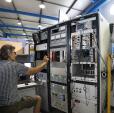
Radiation Testing - Facilities Technical Specifications
ANSTO provides multiple sources for radiation testing of materials and devices including Co-60 gamma sources, x-ray, proton and heavier ion-beams.
New partnership
Australia and Sri Lanks signs new partnership to fight chronic kidney disease.

Isotope Ecologist
Role at ANSTO
Imaging technology has the ability to capture and display gamma radiation
A new imaging technology developed at ANSTO makes it possible to image, identify and locate gamma-ray radiation in a safe and timely manner.
Training session highlighted an approach to calculate the ingested dose of radionuclides in seafood
Dr Mathew Johansen, an environmental scientist at ANSTO, presented in an online IAEA training workshop on Advanced Topics in Radiochemistry Techniques this week.
Showcasing ANSTO's Innovative Technologies at Phoenix's Waste Management Symposia
ANSTO is taking its innovative ANSTO Synroc® and CORIS360® technologies to the world stage at the Waste Management Symposia 2024 in Phoenix, Arizona USA this week (10 – 14 March 2024). Joining over 45 other countries and around 3,000 attendees, an Australian Government contingent comprising of ANSTO and the Australian Radioactive Waste Agency is in attendance to showcase Australia’s extensive radioactive waste management capabilities.
The world’s best radon detector just got smaller
The need for a smaller, more transportable version of ANSTO’s 1500-litre atmospheric radon-222 monitor, and with a calibration traceable to the International System of Units, prompted the team to develop a 200-litre radon monitor that would meet those needs.
Quantum sensing exploits the most counterintuitive properties of quantum systems
Devices that use quantum sensors take advantage of quantum properties, unlike conventional instruments that apply classical physics in their operation.
Irradiations Team Lead
Role at ANSTO
Analysis of fingermarks with synchrotron techniques provide new insights
A new study by researchers from Curtin University using the infrared (IR) and X-ray fluorescence microscopy (XFM) beamlines at the Australian Synchrotron has provided a better understanding of the chemical and elemental composition of latent fingermarks.
New molecule puts scientists a step closer to understanding hydrogen storage
Australian and Taiwanese scientists have discovered a new molecule which puts the science community one step closer to solving one of the barriers to development of cleaner, greener hydrogen fuel-cells as a viable power source for cars.

The Australian Synchrotron
A world-class national research facility that uses accelerator technology to produce a powerful source of light-X rays and infrared radiation a million times brighter than the sun.