

Showing 521 - 540 of 674 results
Fusion research in Australia
Australia part of global renaissance in fusion power research symbolised by ITER experiment
The world’s best radon detector just got smaller
The need for a smaller, more transportable version of ANSTO’s 1500-litre atmospheric radon-222 monitor, and with a calibration traceable to the International System of Units, prompted the team to develop a 200-litre radon monitor that would meet those needs.
Aimed at the delegated Radiation Safety Officer responsible for a range of radioactive substances, radiation apparatus and/or ionising radiation services across a variety of facilities or industries
Sydney
Launch of deep technology incubator
This week ANSTO formally launched the nandin Deep Technology Incubator, a full-service innovation hub that enables the best and the brightest minds to come together to foster innovation and change.
ANSTO to help supply the world with nuclear medicine
Meeting the challenges of a changing scientific landscape with virtual power
Scientists from Indonesia visiting
Oportunity to to gain expertise on neutron instruments
Significant progress on breakthrough cancer therapy
Research has demonstrated that internally generated neutrons could be used to effectively target micro-infiltrates and cancer cells outside of the defined treatment regions.
New approach to breast cancer detection using synchrotron radiation
Phase contrast tomography shows great promise in early stages of study and is expected to be tested on first patients by 2020.
Call for Proposals
Strong representation at ICRS-10
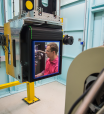
High Performance Macromolecular Crystallography Beamline (MX3)
The High Performance Macromolecular Crystallography beamline will enable the study of very small (sub-5 micrometre) or weakly diffracting crystals, providing a state-of-the-art high-throughput facility for researchers. MX3 will be able to study the structures of large proteins and protein complexes for virology, drug design and industrial applications via goniometer mounted crystals, in-tray screening, or via serial crystallography methods.
Research confirms that echidnas and platypuses descended from an aquatic ancestor
A paper led by researchers at the University of New South Wales (UNSW) published in the PNAS last year has confirmed the theory that echidnas and platypuses descended from an aquatic ancestor with fossil evidence.
Technological innovation and partnership needed to make progress on mental disorders

National Deuteration Facility - News archive
Links to all previous news and case studies published by the National Deuteration Facility
IAEA acknowledges Australia’s nuclear expertise and stewardship during visit
ANSTO showcased its significant contribution to security, safety, and public health during a visit of the Director-General of the International Atomic Energy Agency (IAEA) Rafael Grossi, Minister for Industry and Science Ed Husic, Australian Ambassador to Austria Richard Sinclair and Ambassador for Arms Control and Counter-Proliferation Ian Biggs and other dignitaries at the weekend.
Promising material provides a simple, effective method capable of extracting uranium from seawater
An Australian-led international research team, including a core group of ANSTO scientists, has found that doping a promising material provides a simple, effective method capable of extracting uranium from seawater.
Environment researchers share expertise
Project focuses on enhancing crop productivity in Asia Pacific countries by improving soil and water.
Today we celebrate 65 years since the official opening of Australia’s first nuclear research reactor in 1958
ANSTO is celebrating the official opening of HIFAR, Australia’s first nuclear reactor, sixty-five years ago.