Radiation Services at ANSTO
Highlighted at radiation protection congress


Showing 581 - 600 of 662 results
Highlighted at radiation protection congress

ANSTO is interested finding students to collaborate on Generation IV reactor systems.
The Chair of ANSTO, The Hon Dr Annabelle Bennett, AC SC, announced today that Mr Shaun Jenkinson has been reappointed as the Chief Executive Officer of ANSTO.
An international team has published research in Nature today that identified the oldest known mummified remains of an exceptionally well-preserved terrestrial vertebrate, a 289-million-year-old reptile Captorhinus.
Deuteration and nuclear techniques can contribute to the science of beauty.
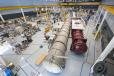
The Australian Centre for Neutron Scattering (ACNS) is a major research facility for neutron science that comprises a suite of neutron instruments with a range of techniques for scientific investigations in physics, chemistry, materials science, medicine and environmental science among other fields.
The ANSTO Awards in Nuclear Science and Technology 2018 were presented on Friday 2 November at The Australian Museum, and showcased ANSTO’s unique nuclear science and technology capabilities, which enable progress in the key areas of health research and innovation for industry.
An Australian-led international research team, including a core group of ANSTO scientists, has found that doping a promising material provides a simple, effective method capable of extracting uranium from seawater.
ANSTO is participating in a new Australian Research Council (ARC) Centre of Excellence for Indigenous and Environmental Histories and Futures (CIEHF) to be headquartered at James Cook University (JCU) that aims to bring Indigenous and environmental histories to the forefront of land and sea management.
A large international collaboration has developed a straightforward and cost-effective synthesizing approach using a 3D printing technique to produce single atom catalysts (SACs)—potentially paving the way for large scale commercial production with broad industrial applications.
ANSTO recognises local Indigenous heritage in new mural
Research highlights how biodistribution of a toxic substance essential to understand all exposure risks.
ANSTO researchers have taken up the challenge to develop a coating for the cladding used in nuclear reactors to prevent it from taking up hydrogen and releasing it if temperatures get too high and repair itself if damaged.
ANSTO has contributed to a recent publication in Nature Communications Biology that represents a landmark achievement in structural biology, an understanding of protein regulation mechanisms in Mycobacterium tuberculosis (Mtb), a global health threat.
The unique magnetic properties and nontrivial quantum effects were observed and measured in an advanced material with potential application for quantum computing.