Funding and infrastructure boost for Australian Synchrotron
$80.2 million in new funding to expand the research capabilities of the Australian Synchrotron.


Showing 61 - 80 of 160 results
$80.2 million in new funding to expand the research capabilities of the Australian Synchrotron.
On average, there is now 17 per cent less rainfall across Western Australia’s south-western region than was recorded prior to 1970. This rainfall reduction has economic, social and environmental implications for the region, in particular for the growing capital of Perth, as well as water-dependent industries in the state.
ANSTO has contributed to a large international study which decodes a fundamental process in Earth’s history and provides guidelines regarding the types of research questions that palaeontologists can investigate using marine fossils.
Cracking the code for crop nutrition and food quality with X-ray fluorescence microscopy.
Routine transport of spent nuclear fuel

ANSTO has been tracking and publishing data on fine particle pollution from key sites around Australia, and internationally, for more than 20 years.
A research team from ETH Zurich developing and characterizing silicon carbide devices for power electronics, recently spent time at ANSTO’s Centre for Accelerator Science to use a specialised beamline in their investigations.
New high energy ion microprobe beamline supports space research on the effects of radiation on astronauts.
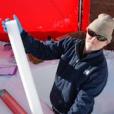

ANSTO provides a list of journal, book, technical and conference publications associated with the Australian Centre for Neutron Scattering, and the Centre for Accelerator Science.
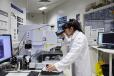
The Infrared Microspectroscopy beamline combines the high brilliance and collimation of the synchrotron beam through a Bruker V80v Fourier Transform Infrared (FTIR) spectrometer and into a Hyperion 3000 IR microscope to reach high signal-to-noise ratios at diffraction limited spatial resolutions between 3-8 μm.
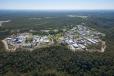
ANSTO is one of Australia’s largest public research organisations and is widely recognised as an international player in the field of nuclear science and technology.
Participate in live radiation demonstrations, cover syllabus content and visit ANSTO virtually during our online depth study classes for Year 11 Chemistry.
- Investigate properties of different radioisotopes and learn about their uses in medicine, industry and environmental research.
- Consider the scientific method and gather data during a live radiation experiment.
- See some of Australia's largest scientific infrastructure, including the OPAL multipurpose reactor.
Cost: $110 per class.
This week marks 20 years since ANSTO’s OPAL multi-purpose reactor first achieved criticality - a defining moment for Australian nuclear science and the beginning of two decades of discoveries, medical advances and industrial innovation delivered from ANSTO’s Lucas Heights campus.

Australia’s Open Pool Australian Lightwater (OPAL) reactor is a state-of-the-art 20 megawatt multi-purpose reactor that uses low enriched uranium (LEU) fuel to achieve a range of activities to benefit human health, enable research to support a more sustainable environment and provide innovative solutions for industry.