
Animal Ethics Approval - Australian Synchrotron
Guidance for obtaining and maintaining human or animal ethics approval at the Australian Synchrotron.


Showing 61 - 80 of 110 results
Guidance for obtaining and maintaining human or animal ethics approval at the Australian Synchrotron.

Funding awarded for research on an additive manufacturing technique for use on rail infrastructure.

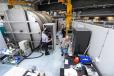
The Platypus instrument can be used to study all-manner of surface-science and interface problems, particularly related to magnetic recording materials and for polymer coatings, biosensors and artificial biological membranes.
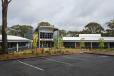
nandin is ANSTO’s Innovation Centre where science and technology entrepreneurs, startups and graduates meet industry expertise to experiment, co-create, innovate, and commercialise, creating new jobs in the high-growth industries of tomorrow.
Principal Technical Consultant Michael Druce shares some personal insights on the design and construction of ANSTO's nuclear medicine facility.
ANSTO's Chief Nuclear Officer shares insights on the safe management of Australia's nuclear waste.

This scholarship recognises outstanding ability and promise in the field of nuclear science and technology, specifically as it applies to nuclear energy. Successful applicants will demonstrate a history of interest in nuclear energy and a desire to continue this interest.


Innovative medical device Rhenium-SCT® therapy for non-melanoma skin cancer is now available in Australia

ANSTO Synroc technology provides a safe, secure matrix for the immobilisation and final disposal of radioactive waste.

Explore ANSTO's range of publications and reports available for the public.
Research is being undertaken through an Australian Research Council Discovery Project "Reconstructing Australia’s fire history from cave stalagmites", led by Professor Andy Baker at UNSW Sydney and Dr. Pauline Treble at ANSTO. The project aims to calibrate the fire-speleothem relationship and develop coupled fire and climate records for the last millennium in southwest Australia.
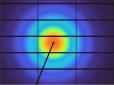
The Biological Small Angle X-ray Scattering beamline will be optimised for measuring small angle scattering of surfactants, nanoparticles, polymers, lipids, proteins and other biological macromolecules in solution. BioSAXS combines combine a state-of-the-art high-flux small angle scattering beamline with specialised in-line protein purification and preparation techniques for high-throughput protein analysis.
ANSTO scientist, Dr Klaus Wilcken of the Centre for Accelerator Science, used cosmogenic nuclide dating to determine the ages of layered sand and gravel samples, in which seven footprints of the flightless bird, the moa, were found on the South Island in New Zealand in 2019.
The Titan Krios cryo-electron microscope reveals the inner workings of life at the cellular level.
Ongoing media statements relating to nuclear medicine production.