

Showing 61 - 80 of 513 results
Cosmetic chemistry
Deuteration and nuclear techniques can contribute to the science of beauty.
Expertise in characterising materials for lithium ion batteries
Pioneering work on materials for energy production, such as lithium ion batteries, has made ANSTO a centre of specialist capabilities and expertise.
Strategic research agreement
Strategic partnership with the University of Sydney expanded to continue a long history of research collaboration.
Leveraging over half a century of knowledge in the safe management of radioactive waste
ANSTO's Chief Nuclear Officer shares insights on the safe management of Australia's nuclear waste.
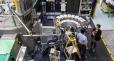
Wombat - High-Intensity Diffractometer
Wombat is a high intensity neutron diffractometer that is primarily used as a high-speed powder diffractometer, but has also expanded into texture characterisation and single-crystal measurement, particularly diffuse scattering.
Fine tuning materials for energy storage using architectural design and structural engineering
Energy researchers from UNSW have reported progress using controlled architectural design and structural engineering as a method to fine-tune materials to have simultaneous high power and high energy density for the electrochemical storage in portable devices.
Seeing inside artefact
Seeing inside an ancient Australian Indigenous artefact non-invasively using neutron tomography.
Promising new cathode material for low-temperature solid-oxide fuel cells
Powerhouse Museum used powerful non-invasive nuclear and accelerator techniques to gain information about significant Aboriginal cultural belongings
A number of sophisticated non-invasive nuclear and accelerator techniques were used to provide information about the origin and age of an Australian Aboriginal knife held in the collection of the Powerhouse Museum.
FLEET appointment
Instrument scientist and expert in low dimensional magnetism Dr Kirrily Rule joins FLEET ARC Centre.
Glass is a lens to cool nuclear science during National Science Week
Nuclear tech helps power Perseverance Rover on Mars
A large international research team led by Academia Sinica in Taiwan investigated how heat is transferred in an advanced thermoelectric material made with germanium (Ge) and tellurium (Te) and doped with antimony (Sb). These devices are used to power space probes such as the Mars Curiosity Rover.

PIXE
Particle induced X-ray emission can be used for quantitative analysis in archaeology, geology, biology, materials science and environmental pollution.
Research supports potential local supply chain for component in COVID PCR test
University of Melbourne researchers have investigated a method to produce magnetic nanoparticles in Australia for use in COVID-19 PCR tests.

COVIDSafe Plan
This COVIDSafe Plan describes the actions that ANSTO will take to keep our staff, contractors and visitors safe and minimise the risk of the spread of COVID-19 infection.

Corporate Publications
Explore ANSTO's range of publications and reports available for the public.
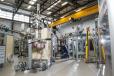
Particle Induced X-ray Emission
Particle Induced X-ray Emission (PIXE) is a powerful and relatively simple analytical technique that can be used to identify and quantify trace elements typically ranging from aluminium to to uranium.
Award-winning research publication on superalloys
Industrial Engagement Manager at ANSTO and Professor in Advanced Structural Materials at the University of Sydney, Anna Paradowska is among the authors who contributed to a 2019 paper that was recently awarded the ASM International ASM Henry Marion Howe Medal in Metallurgical and Materials Transactions A.
ANSTO's neutrons will help miners see what's inside drill cores with new clarity
The mining industry is set to benefit from a new Australian capability that uses a nuclear scanning technique to detect the presence of precious metals and strategic minerals in a core sample.