

Showing 61 - 80 of 159 results
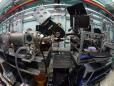
Technical information - SAXS / WAXS
Technical information on the SAXS / WAXS beamline at the Australian Synchrotron.
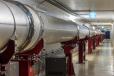
Imaging and medical
The Imaging and Medical beamline (IMBL) is a flagship beamline of the Australian Synchrotron built with considerable support from the NHMRC. It is one of only a few of its type, and delivers the world’s widest synchrotron x-ray ‘beam’.
Experts to discuss latest developments in state-of-the-art radiation treatments for cancer which use accelerated particles
Work well underway on Australia's new nuclear medicine facility
UM2022 Speakers

User Meeting 2025 - Awards & Prizes
You are invited to submit to the various awards from ANSTO and the User Meeting 2025 organising committee.

Senior Project Manager
Role at ANSTO

Lead, Food Materials Science; Instrument Scientist, QUOKKA (Small-Angle Neutron Scattering); Honorary Professor, CNFS, The University of Queensland
Role at ANSTO
ANSTO Staff gear up for Sutherland2Surf
Fossil provides world-first evidence of ancient marine behaviour in Gondwana
ANSTO has supported research that revealed for the first time that marine reptile ichthyosaurs consumed pterosaurs before becoming prey themselves to giant marine predators.
Seeing clearly: Young researcher honoured for pushing microscope boundaries
Research confirms that echidnas and platypuses descended from an aquatic ancestor
A paper led by researchers at the University of New South Wales (UNSW) published in the PNAS last year has confirmed the theory that echidnas and platypuses descended from an aquatic ancestor with fossil evidence.
Collaboration develops new imaging protocol
Imaging protocol assesses molecular mechanism of work in the treatment of deadly childhood cancer neuroblastoma.
Emerging from the deep: Stawell’s dark matter lab takes shape

ANBUG Promotion of Women in Neutron Scattering Program 2026
Dharawal mural and sign unveiled
Dharawal Mural tells an ancient story. Aboriginal and Torres Strait Islander viewers are advised that webpage contains images of people who have died.
Mummified remains reveal breathing and movement in the ancient world of reptiles
An international team has published research in Nature today that identified the oldest known mummified remains of an exceptionally well-preserved terrestrial vertebrate, a 289-million-year-old reptile Captorhinus.
ANSTO PhD student wins Jak Kelly Prize