To D or not to D
New screening method developed to confirm if deuteration improves metabolic stability.


Showing 761 - 780 of 1694 results
New screening method developed to confirm if deuteration improves metabolic stability.
A specialist in particle therapy treatment planning from the Mayo Clinic in the US, Professor Chris Beltran, recently visited ANSTO for an exchange for information.

The scientific and technical staff at the Centre for Accelerator Science have a comprehensive range of skills and abilities in the operation of accelerator instruments and techniques,
ANSTO physicist supports launch of new carbon ion therapy treatment service in Austria.
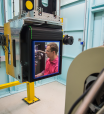
The High Performance Macromolecular Crystallography beamline will enable the study of very small (sub-5 micrometre) or weakly diffracting crystals, providing a state-of-the-art high-throughput facility for researchers. MX3 will be able to study the structures of large proteins and protein complexes for virology, drug design and industrial applications via goniometer mounted crystals, in-tray screening, or via serial crystallography methods.
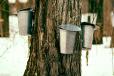
The sap extracted from Sugar Maple trees, is used to produce maple syrup. There are many conflicting theories and an absence of experimental evidence, regarding the mechanisms involved in maple sap exudation.
Evidence of the earliest occupation of the coasts of Australia from Barrow Island, Northwest Australia.

New material shows enhanced conductivity for solid oxide fuel cells used in satellites, spacecraft, transport vehicles and as power source
Award recipients Dr Richard Garrett and Dr Nigel Lengkeek with Dr Tien Pham will deliver a Distinguished Lecture on 15 November at ANSTO.
Atmospheric scientists have developed a new technique to measures the naturally-occurring radioactive gas radon for use in accurately categorising the degree of atmospheric mixing.

Learn. Create. Innovate
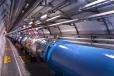
Dr Jessica Hamilton, a beamline scientist at the Australian Synchrotron, has won the Falling Walls Lab competition hosted by the Australian Academy of Science for her 3 minute presentation on a novel approach to using mining waste for carbon dioxide capture and a source of carbonate minerals. The event is held to deliver solutions to some of the most promising challenges of our time.
ANSTO has made progress on a more cost-effective way to produce the medical radioisotope molybdenum-99 (Mo-99), with less enrichment of uranium-235 (U-235) and produce less waste.