


Showing 81 - 100 of 172 results

Imaging Support Technical Officer, NSTLI Biosciences
Role at ANSTO
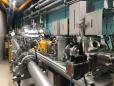
Medium Energy X-ray Absorption Spectroscopy Beamline (MEX-1 and MEX-2)
The Medium Energy- X-ray Absorption Spectroscopy beamlines provides access to XANES and EXAFS data from a bending magnet source, optimised for cutting-edge applications in biological, agricultural and environmental science in an energy range that is not currently available at the Australia Synchrotron.

About us
The Detection & Imaging group builds on ANSTO’s 70-year history of scientific achievements and contributions in meeting the nuclear needs of industry, globally.

Shorebirds Competition 2021
ANSTO is proud to host the Shorebirds Competition for the fourth year. This unique environmental poster competition is free to enter and offers over $4000 in prizes (insert link to prizes button) for students and schools!
Synchrotron techniques reveal structural details of fossilised fragment of a rare Australian dinosaur skull
This week palaeontologists from Curtin University announced that a specimen from the collection of the Australian Age of Dinosaurs Museum in Winton Queensland as the first near complete skull of a sauropod, a massive, long-tailed, long-necked, small-headed plant-eating dinosaur, found in Australia and other parts of the world.
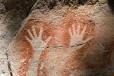
How climate change is erasing the world’s oldest rock art
Australasia is home to some of the oldest rock art motifs in the world. In tropical latitudes, due to climate change, the rock art deterioration is accelerating.
WA outback proves no match for Aussie nuclear know-how
A dedicated team of radiation specialists from the Australian Nuclear Science and Technology Organisation (ANSTO) are behind the successful detection and rapid retrieval of a missing radioactive source in outback Western Australia.
Code of Conduct: AANSS 2024
Code of Conduct: User Meeting 2022
Powerful new microscope a game changer in battle against disease
The Titan Krios cryo-electron microscope reveals the inner workings of life at the cellular level.

Preclinical imaging
Expertise in the use of PET and SPECT imaging techniques to understand biological processes at the cellular and molecular level. The techniques ae also used to study disease processes and monitor the effects of new therapies
Emerging from the deep: Stawell’s dark matter lab takes shape
The composition and manufacturing history of African swords revealed
ANSTO scientists were members of an inter-disciplinary team led by the University of Sydney, who examined six 19th century West African swords, using a non-invasive multi-methodological approach to reveal the composition and manufacturing history of the iron implements.
History revealed
Dingo sees through heavy corrosion to help dentify an historic firearm.
Imaging at ANSTO supported Curtin University-led research that discovered the oldest 3D heart in a 380-million-year-old fossilised fish
Researchers have discovered a 380-million-year-old heart – the oldest ever found – alongside a separate fossilised stomach, intestine and liver in an ancient jawed fish, shedding new light on the evolution of our own bodies.

UM2022 Speakers
What are radioisotopes?
Radioisotopes are widely used in medicine, industry, and scientific research. New applications for radioisotopes are constantly being developed.
Tracking oxytocin to understand the biological pathways linked to human cognition and behaviour
Sustainability expert joins ANSTO's Innovation Precinct
Dr Anne Hellstedt has been appointed Director of ANSTO’s Innovation Precinct.