

Showing 81 - 100 of 174 results

Senior Beamline Scientist – Infrared Microspectroscopy (IRM)
Role at ANSTO

Radioactive capsule goes missing in Australian outback
A tiny 8mm by 6mm radioactive capsule went missing in January 2023, somewhere along a 1400 kilometre journey from Rio Tinto’s Gudai-Darri iron ore mine to its final destination in Perth, Western Australia. Find out how ANSTO's CORIS360® technology identified the exact location of the missing source.
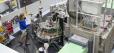
Proposed Facility Access Terms and Conditions
ANSTO sets out the following terms and conditions relating to users who access our facilities for the purpose of research.
First magnetisation curves from PPMS

United Uranium Scholarship - Privacy Collection Notice
In accordance with the Trust Deed, the United Uranium Scholarship is awarded to ‘promising young scientists’ from any Australian organisation or institution whose research or work is in the field of nuclear energy.

Governance
ANSTO is a highly regulated organisation. Our governance system and processes provide critical guidance to effectively manage ANSTO’s activities. This section outlines the processes and systems that are in place to provide assurance to Government, our stakeholders and the community that we are working within our regulated and mandated requirements.
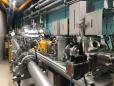
Medium Energy X-ray Absorption Spectroscopy Beamline (MEX-1 and MEX-2)
The Medium Energy- X-ray Absorption Spectroscopy beamlines provides access to XANES and EXAFS data from a bending magnet source, optimised for cutting-edge applications in biological, agricultural and environmental science in an energy range that is not currently available at the Australia Synchrotron.
Compressed sensing technology
Using the theory of compressed sensing technology, a team of physicists and scientists invented and developed the CORIS360® platform imaging technology. Compressed sensing imaging can generate an image with far fewer samples compared with traditional imaging techniques.
Today we celebrate 65 years since the official opening of Australia’s first nuclear research reactor in 1958
ANSTO is celebrating the official opening of HIFAR, Australia’s first nuclear reactor, sixty-five years ago.

User access at the National Deuteration Facility
The National Deuteration Facility offers access to deuterated molecules prepared by both in vivo biodeuteration and chemical deuteration techniques.
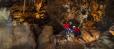
Reconstructing Australia’s fire history from cave stalagmites
Research is being undertaken through an Australian Research Council Discovery Project "Reconstructing Australia’s fire history from cave stalagmites", led by Professor Andy Baker at UNSW Sydney and Dr. Pauline Treble at ANSTO. The project aims to calibrate the fire-speleothem relationship and develop coupled fire and climate records for the last millennium in southwest Australia.
Advanced imaging techniques provide earliest evidence of fruit-eating by ancient bird
International palaeontologists have used advanced imaging techniques at ANSTO’S Australian Synchrotron to clarify the role that the earliest fruit-eating birds of the Cretaceous period may have had in helping fruit-producing plants to evolve.
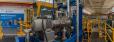
ANSTO Synroc® Treatment Facility
ANSTO Synroc® is constructing an Australian radioactive waste treatment facility for the by-products of Molybdenum-99 (Mo-99) production.
Actinide and heavy ion isotopic analysis
ANSTO has the capability to analyse heavy isotopes such as 129I, platinum group elements, 236U and Pu isotopes.
Artefact reveals resilience of Aboriginal cultural knowledge
New grant introduces state-of-the-art capability in stress engineering for Australian industry
New facility will greatly enhance Australia’s capability in stress engineering for industry
Study of polar ice confirms carbon-climate feedback
Investigators have verified and quantified the relationship between the Earth’s land biosphere and changes in temperature and provided evidence that temperature impacts the cycling of carbon between land, ocean and the atmosphere.
Excavation of dark matter lab completed
With all excavation completed and rock removed from the underground site, the physics lab will now be built within the caverns of the Stawell Mines site.
Man-made fossil emissions larger than previously believed
ANSTO contributes to major study on global warming by measuring methane and carbon monoxide trapped in ice.