

Showing 81 - 100 of 130 results

Feather Map of Australia
New grant introduces state-of-the-art capability in stress engineering for Australian industry
New facility will greatly enhance Australia’s capability in stress engineering for industry

Eureka Prizes 2025
Synchrotron techniques reveal amount of carbon captured in microscopic seams of deep-sea limestone
A collaboration of Australian scientists has used ANSTO’s Australian Synchrotron to measure the amount of carbon that is captured in microscopic seams of deep-sea limestone, which acts as a carbon sink.
Our understanding of the atom powers ANSTO's nuclear and accelerator research techniques
Scientists at ANSTO characterise structures with atomic detail using probes such as x-rays, electrons, neutrons and ions.

Shorebirds Competition 2020
A lesson in Science and Sustainability.

About the ANSTO Hackathon
Graduate profile - Monica Hibberd & Hamish McDougall
Monica Hibberd and Hamish McDougall are working together on research into greener and more efficient energy and battery technology.
Small Modular Reactors: An overview

Diversity, Equity, Inclusion and Belonging
At ANSTO we understand that diverse teams produce better outcomes – and we value the merit that a diverse perspective can bring to the quality and outcomes of our work, and the way we get the job done.
Sample Information
How to prepare samples for analysis on the Powder Diffraction beamline.
A closer look at the science of detecting flu
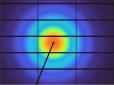
Biological small angle X-ray scattering beamline (BioSAXS)
The Biological Small Angle X-ray Scattering beamline will be optimised for measuring small angle scattering of surfactants, nanoparticles, polymers, lipids, proteins and other biological macromolecules in solution. BioSAXS combines combine a state-of-the-art high-flux small angle scattering beamline with specialised in-line protein purification and preparation techniques for high-throughput protein analysis.

Kookaburra - Ultra small angle neutron scattering
Ultra small angle neutron scattering on Kookaburra is used to study the size and shape of objects of size 10 micrometres and below.
Microscale clues provide insight into cataclysmic Tongan volcanic eruption
In an effort to understand why the Tongan Hunga volcano eruption was so explosive, internationally-recognised volcanologist Prof. Shane Cronin of the University of Auckland and associates rely on beamlines at the Australian Synchrotron to support comprehensive research on the Hunga event.

Nanoprobe beamline (NANO) - under construction
The BRIGHT Nanoprobe beamline provides a unique facility capable of spectroscopic and full-field imaging. NANO will undertake high-resolution elemental mapping and ptychographic coherent diffraction imaging. Elemental mapping and XANES studies (after DCM upgrade) will be possible at sub-100 nm resolution, with structural features able to be studied down to 15 nm using ptychography.

In-situ cosmogenic carbon-14
ANSTO and the University of Wollongong are jointly operating a unique laboratory able to extract carbon-14 (radiocarbon) atoms out of a rock that is attracting global interest as a new tool to better understand recent changes in Earth’s climate system and rates of landscape change over the past 20, 000 years.
Advanced imaging techniques provide earliest evidence of fruit-eating by ancient bird
International palaeontologists have used advanced imaging techniques at ANSTO’S Australian Synchrotron to clarify the role that the earliest fruit-eating birds of the Cretaceous period may have had in helping fruit-producing plants to evolve.
Improving carbon dating
Study helps make carbon dating a more accurate chronological tool.