Schools' participation high for National Science Week
Just under 250 schools in Australia and one school in Malaysia will participate in a series of science-based competitions during to coincide with National Science Week in 2024.


Showing 801 - 820 of 1717 results
Just under 250 schools in Australia and one school in Malaysia will participate in a series of science-based competitions during to coincide with National Science Week in 2024.
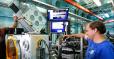
The SAXS / WAXS beamline at the Australian Synchrotron is a highly flexible x-ray scattering facility with purpose-built optics and a very flexible endstation and SAXS camera enable multiple types of experiments.
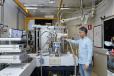
The THz/Far-IR Beamline couples the high brightness and collimation of a bend-magnet synchrotron radiation to a Bruker IFS125HR spectrometer providing high-resolution spectra (0.00096 cm-1) with signal to noise ratio superior to that of thermal sources up to 1350 cm-1 for gas-phase applications; the beamline also delivers signal to noise ratio superior to that of thermal sources up to 350 cm-1 for condensed phase samples.

Over the last decades, neutron, photon, and ion beams have been established as an innovative and attractive investigative approach to characterise cultural-heritage materials.
Radiocarbon dating at ANSTO has supported new archaeological research conducted by Flinders University and the University of Queensland that describes significant earth mound features used for cooking that were created by Aboriginal people in the Riverland region of South Australia.

Retrieving an Antarctic ice core more than a million years old presents challenges and opportunities.
State- of-the-art microdosimeters used in research

The Macromolecular Crystallography beamlines at the Australian Synchrotron (MX1 and MX2) are general purpose crystallography instruments for determining chemical and biological structures.
Routine transport of spent nuclear fuel
Paper on redefinition of the kilogram receives international award
Dr Inna Karatchevtseva, who collaborates with DMTC, was among those identified by The Australian in its Research magazine as a national leader in her field of ceramic engineering
A desire to give people around the world greater access to the benefits of nuclear medicine is behind Robert Raposio and his research into producing radioisotopes in more efficient, cheaper and sustainable ways.
ANSTO has signed a strategic agreement with the Australian National University and sets the relationship between the two organisations, who collaborate on important projects, such as the fusion energy project ITER and space research, well into the future.

At ANSTO we have a large range of facilities that can be used to investigate planetary materials.
Twenty-four participants from Asia and the Pacific travelled to ANSTO for an International Atomic Energy Agency Regional Training Course on ‘Production and preclinical evaluation of emerging cyclotron-based radiopharmaceuticals’