Beamline Scientist - MX


Showing 981 - 1000 of 1717 results

ANSTO provides eduroam services for partnering institutions in Australia and around the world.
Sample environments, Data analysis.
ANSTO scientists have been featured in the new issue of Careers with STEM Science, a publication produced for high school students, undergraduates and grads, careers advisors, teachers and parents to discover careers and study paths.
A collaborative group including Monash has produced an ultra-thin and ultra-flexible organic solar cell for advanced wearable devices.
Doping with transition metals produced stability in bismuth oxide.
Doping with transition metals produced stability in bismuth oxide.
Using neutron imaging techniques at ANSTO, researchers from Macquarie University have gained a better understanding of how corrosion forms and spreads through concrete that is commonly used in sewer pipes.

Synchrotron light is the electromagnetic radiation emitted when electrons, moving at velocities close to the speed of light, are forced to change direction under the action of a magnetic field.
Use of nuclear techniques to benefit industry and consumers
Blue Carbon Horizons Team showed coastal wetlands capture more carbon as sea levels rise
La Trobe University researchers have used the Australian Synchrotron in a new study that reveals how crocodiles resist fatal fungal infections with a unique pH sensing mechanism despite living in filthy water.
Event held to mark anniversary of SPRing-8 in Japan.
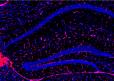
Research is undertaken to characterise and optimise the beneficial impacts of radiation on living matter