

Showing 101 - 120 of 156 results
ANSTO co-developed technology LieNa® receives funding boost in a win for Australia’s lithium and critical minerals industry
A world-first processing technology developed in collaboration by ANSTO’s Minerals unit.
National Volunteer Week 2014: Part One
ANSTO is the new production partner of OncoBeta® GmbH in Australia
Innovative medical device Rhenium-SCT® therapy for non-melanoma skin cancer is now available in Australia
NSW RFS Hazard Reduction Burn at ANSTO
Air pollution sampler installation in Papua New Guinea

Imaging Neurophysiologist
Role at ANSTO
Using nuclear techniques to track micronutrients applied to wheat crops
Researchers from Murdoch University and associated collaborators are using ANSTO’s unique nuclear capabilities to gain detailed information about how wheat crops take in administered micronutrients to maximise their efficient use.
A way forward for nuclear technology in Australia with public approval
Federal Parliament’s House Standing Committee on the Environment and Energy has presented its report, arising from its Inquiry into the prerequisites for nuclear energy in Australia today.
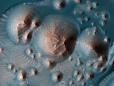
The characterisation of planetary materials
ANSTO provides a range of capabilities using neutrons, X-rays and infrared radiation to study the solids, liquids and gases that might be found in materials in our solar system and beyond.
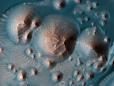
The characterisation of planetary materials
ANSTO provides a range of capabilities using neutrons, X-rays and infrared radiation to study the solids, liquids and gases that might be found in materials in our solar system and beyond.

PIXE
Particle induced X-ray emission can be used for quantitative analysis in archaeology, geology, biology, materials science and environmental pollution.
Research highlights the importance of the Murray Darling Basin for Australia’s waterbirds
An environmental study supported by a citizen science project at ANSTO and UNSW has brought greater understanding of the movement of birds between all of Australia’s major water basins and the importance of the Murray-Darling River Basin.
Celebrating Australian women in nuclear
Highlighting the contribution of four inspirational ANSTO leaders on International Women's Day.
Radiocarbon is a powerful tracer for ocean circulation and climate studies
Radiocarbon analyses on corals from two sites in Australian waters of the southwest (SW) Pacific has indicated significant changes in ocean circulation in the Pacific and large climate variability during the early to mid-Holocene period (8,000-5,400 years ago).

Stable Isotope Analyst
Role at ANSTO

Particle Induced X-ray Emission
Particle Induced X-ray Emission (PIXE) is a powerful and relatively simple analytical technique that can be used to identify and quantify trace elements typically ranging from aluminium to to uranium.
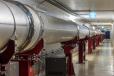
Imaging and medical
The Imaging and Medical beamline (IMBL) is a flagship beamline of the Australian Synchrotron built with considerable support from the NHMRC. It is one of only a few of its type, and delivers the world’s widest synchrotron x-ray ‘beam’.
Indigenous knowledge linked to pollution data
Atmosphere scientists find link between indigenous weather knowledge and Sydney air pollution.