
Corporate Publications
Explore ANSTO's range of publications and reports available for the public.


Showing 101 - 120 of 130 results
Explore ANSTO's range of publications and reports available for the public.
During the scheduled shutdown of the OPAL multi-purpose reactor, an ANSTO engineering and project team has installed a new safety shutdown instrumentation and control system (I&C).
The Titan Krios cryo-electron microscope reveals the inner workings of life at the cellular level.
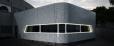
The Advanced Diffraction and Scattering beamlines (ADS-1 and ADS-2) are two independently operating, experimentally flexible beamlines that will use high-energy X-ray diffraction and imaging to characterise the structures of new materials and minerals.
The ARC Centre of Excellence (CoE) for Green Electrochemical Transformation of Carbon Dioxide, GETCO2, will support innovative approaches to carbon capture.
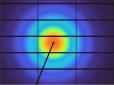
The Biological Small Angle X-ray Scattering beamline will be optimised for measuring small angle scattering of surfactants, nanoparticles, polymers, lipids, proteins and other biological macromolecules in solution. BioSAXS combines combine a state-of-the-art high-flux small angle scattering beamline with specialised in-line protein purification and preparation techniques for high-throughput protein analysis.


This scholarship recognises outstanding ability and promise in the field of nuclear science and technology, specifically as it applies to nuclear energy. Successful applicants will demonstrate a history of interest in nuclear energy and a desire to continue this interest.
Routine transport of spent nuclear fuel
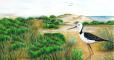
An initiative for National Science Week 2024 the Shorebirds Competition addresses the 2024 theme for National Science Week, ‘Species Survival’ and provides unique cross-curricula learning for Australian primary students in Years 3 to 6.

Primary students across Australia were invited to create a public awareness poster for a threatened shorebird found in Australia for our 2020 Shorebirds Competition. In response to COVID-19, and the changes to children’s learning environments, we opened the competition early and also included categories for individual children to enter, as well as school children.
Latest information on the scheduled supply of our nuclear medicine production.
ANSTO scientist, Dr Klaus Wilcken of the Centre for Accelerator Science, used cosmogenic nuclide dating to determine the ages of layered sand and gravel samples, in which seven footprints of the flightless bird, the moa, were found on the South Island in New Zealand in 2019.



ANSTO has been tracking and publishing data on fine particle pollution from key sites around Australia, and internationally, for more than 20 years.
ANSTO commenced an aerosol sampling program thirty years ago this week to characterise these pollutants and ultimately, identify their sources, which has taken it to the forefront of environmental monitoring of this type in Australia and the region.