

Showing 101 - 120 of 254 results

Identification and analysis of components in bruises
As blood breaks down in the skin tissue, the colour of a bruise changes with time. As such, it may be used to find out information about the age of the bruise and hence a timeframe of when the incident that caused the mark took place.
Optoelectronic industry to benefit from cheap new chemical production process

User Meeting 2026 - Awards
You are invited to submit to the various awards from ANSTO and the User Meeting 2026 organising committee.
Archive
See details of previously published customer updates from our Health products team.
Nuclear medicine congress
Congress marks watershed moment for nuclear medicine and ANSTO
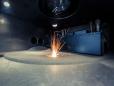
Multiscale modelling of laser-based additive manufacturing for the development of process–structure–property relationships
ANSTO is working with academic and industry partners on the development of multiscale numerical simulations of Laser Metal Deposition (LMD) 3D printing.
Australia’s best and brightest nuclear scientists recognised in 2018 ANSTO Awards
The ANSTO Awards in Nuclear Science and Technology 2018 were presented on Friday 2 November at The Australian Museum, and showcased ANSTO’s unique nuclear science and technology capabilities, which enable progress in the key areas of health research and innovation for industry.

Lead, Food Materials Science; Instrument Scientist, QUOKKA (Small-Angle Neutron Scattering); Honorary Professor, CNFS, The University of Queensland
Role at ANSTO
First light achieved for new micro-computed tomography beamline under Project BRIGHT
Project Bright, the construction of eight new beamlines at ANSTO’s Australian Synchrotron has reached a milestone by achieving ‘First Light’ for the new micro-computed tomography (MCT) beamline in late NovembeR.
Evaluating the impact of nanomaterials on health and the environment
ANSTO has put together a robust multidisciplinary approach to understanding the impacts of nanomaterials, investigating a common food additive, E171 titanium dioxide, used primarily as a colouring agent in everyday foods.
Powerful collaborations using ANSTO scientific infrastructure help to improve cancer outcomes
Synchrotron saved with half billion dollar funding stream

Sydney Access Proposals
View the upcoming proposal deadlines for access to ANSTO’s Research Portal. The User Office provides support for research proposals and enables you to leverage our world-class research infrastructure and facilities.
Synchrotron images provide insights into patient healing after placement of dental implants

Senior Preclinical Imaging Scientist
Role at ANSTO
Major study identifies a potential drug target for lowering cholesterol
Study explored how key proteins manage dietary cholesterol absorption and elucidated crucial transport mechanisms that contribute to cholesterol balance in the body.

Lead Scientist - Advanced Diffraction & Scattering beamlines
Role at ANSTO

OPAL 2024 Shutdown
ANSTO's OPAL reactor is one of the world's most advanced and reliable research reactors today. To ensure we can continue operating OPAL safely and reliably and maximise utilisation, ANSTO must regularly carry out maintenance and upgrades.