Significant progress on breakthrough cancer therapy
Research has demonstrated that internally generated neutrons could be used to effectively target micro-infiltrates and cancer cells outside of the defined treatment regions.


Showing 1001 - 1020 of 2173 results
Research has demonstrated that internally generated neutrons could be used to effectively target micro-infiltrates and cancer cells outside of the defined treatment regions.
ANSTO has produced a comprehensive report for the NSW Department of Planning and Environment that represents a significant scientific investigation of the connections, pathways and processes of water loss from the Thirlmere Lakes system.
indigenous Cultural Intellectual Property is a broader way of talking about First Peoples’ rights to their cultural heritage, traditional knowledge and cultural expressions.
IAEA Regional Training Course on coastal environments held at ANSTO for representatives from Asian Pacific.
An unassuming rock shelter in the Flinders Ranges has been revealed as the oldest known evidence of Aboriginal Australian settlement, thanks in part to advanced nuclear techniques, technology and scientists.

How can you speed up your production pathway to better surface modification?
A large international collaboration has developed a straightforward and cost-effective synthesizing approach using a 3D printing technique to produce single atom catalysts (SACs)—potentially paving the way for large scale commercial production with broad industrial applications.
Research highlights how biodistribution of a toxic substance essential to understand all exposure risks.
The protein mapping workhorses of the Australian Synchrotron, Macromolecular and Microfocus crystallography beamlines, MX1 and 2, continue to support important biomedical research in the development of vaccines and new therapeutics.
Modelling and experimentation - a powerful combination in probing mechanical properties of ion irradiated materials through nanoindentation.
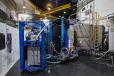
Sample environments, Data analysis, SpICE and SICS
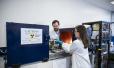
The work of the group comprises Radioactivity Measurement Standards, Radioanalytical chemistry, Environmental Radioactivity Measurement Centre, Nuclear security science and Environmental monitoring.

Explore the exciting finalist and runner up entries of previous year ANSTO hackathons!

ANSTO offers accelerator-based particle-induced gamma-ray emission techniques to determine total fluorine concentration in a range of solid materials and rapidly screen for the presence of PFAS (perfluoroalkyl and polyfluoroalkyl substances).