
Scholarships
ANSTO offers access to a range of scholarships, awards, grants and prizes. Find out what's open for application.


Showing 1001 - 1020 of 1023 results
ANSTO offers access to a range of scholarships, awards, grants and prizes. Find out what's open for application.

Applications are currently open for the 2024 Scholarship AINSE ANSTO French Embassies (SAAFE) Research Internship Program. The SAAFE Program supports early career researchers at PhD and Postdoctoral level to expand research and innovation activities within Human Health, the Environment and the Nuclear Fuel Cycle, to initiate sustainable research networks and linkages to support Australia, New Zealand and France research and innovation.


The 2025 Deaf Youth Science Camp is a chance for Deaf/hard-of-hearing young people (aged 12-17 years old) to participate in an immersive science experience. At the camp, participants will do hands-on science activities, go on tours of different science facilities, and meet Deaf STEM professionals. The camp is also an opportunity to develop personal and leadership skills as well as enhance friendship networks.
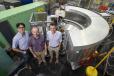
Neutron powder diffraction is particularly useful for materials with light elements in the presence of heavy ones and for magnetic materials such as superconductors, pharmaceuticals, aerospace alloys and much more.

Koala is one of the leading small-molecule crystallography instruments in the world for determining the complex crystal structure of a wide range of chemicals and minerals.
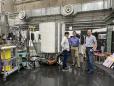
The instrument is ideally suited to study of spin and lattice dynamics, magnon and phonon dispersion relations in single crystal samples.

Wombat is a high intensity neutron diffractometer that is primarily used as a high-speed powder diffractometer, but has also expanded into texture characterisation and single-crystal measurement, particularly diffuse scattering.

Taipan is used to study the collective motion of atoms, phonons and magnons in materials, and phase transitions and processes involving thermal energy.
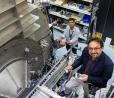
The QUOKKA instrument provides the powerful technique of small-angle neutron scattering which can look at sizes and structures of objects on the nanoscale including soft matter.

Ultra small angle neutron scattering on Kookaburra is used to study the size and shape of objects of size 10 micrometres and below.

ANSTO holds a variety of citizen science competitions every year for primary and secondary school-aged students and the general public to win great prizes.
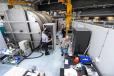
The Platypus instrument can be used to study all-manner of surface-science and interface problems, particularly related to magnetic recording materials and for polymer coatings, biosensors and artificial biological membranes.
The instrument is very well suited for the study of kinetic effects, like relaxation following a chemical reaction, or external impulses like mechanical deformation, an electric or magnetic field.